Flooring quotes can feel confusing. One contractor gives you a low number. Another comes in much higher for what looks like the same job. So what’s really going on?
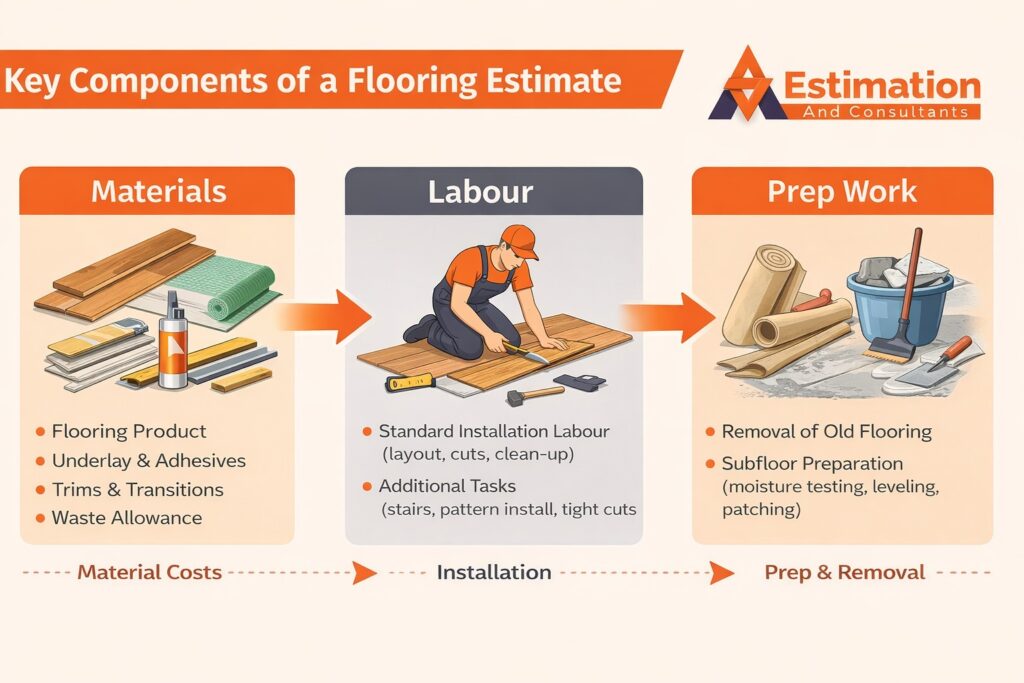
The answer usually comes down to what is included in a flooring quote. A proper flooring estimate breakdown should clearly separate materials, labour, and prep work. When flooring estimate inclusions are not clearly defined, hidden costs in flooring estimates appear later. This guide will walk you through exactly what to look for, so you can understand the real flooring cost breakdown and compare quotes with confidence.
Why Flooring Quotes Look “All Over the Place”
Two quotes for the same floor can look completely different. That’s because each contractor may define the scope differently. A basic estimate might only show materials and installation, while a detailed flooring estimate breakdown includes prep, removal, and finishing touches.
The real difference comes down to flooring estimate inclusions and scope clarity. If one quote leaves out key flooring cost drivers—like subfloor prep or waste allowance—you’ll face hidden costs in flooring estimates later. Always check what a flooring estimate covers before comparing prices.
Key Reasons Prices Vary
- Estimate vs Quote
An estimate is an approximate cost. A quote is usually fixed, based on a clear flooring quote, inclusions, and a defined scope. - Different Scope Assumptions
One contractor may include removal and levelling, another may not. Poor scope clarity creates price gaps. - Materials Listed Differently
Some show full product + accessories. Others only list the main flooring, not what is included in a flooring quote. - Prep Work Missing
Subfloor prep is a major flooring cost driver. If it’s excluded, the price looks cheaper at first. - Labour Calculated Differently
Productivity, access, and room shape affect the flooring cost breakdown. - Hidden Allowances
Waste, transitions, or furniture moving may not be clearly stated, leading to hidden costs in flooring estimates.
Bucket 1 — Materials (What You’re Paying For)
This part of the flooring estimate covers the physical products only. No labour. No prep. Just materials. A clear flooring supply breakdown should list product type, material quantities, unit rates, and the waste allowance percentage. This helps you see the true flooring materials cost and avoid confusion in the flooring material and labour cost split.
A proper materials section also includes the supporting items needed to complete the floor. These are not “extras.” They are part of what is included in a flooring quote and should never be hidden.
Flooring Product (Supply) — Quantity, Rate, and Waste
The main line item is the flooring itself. It should show the total area measured and how the flooring quantity calculation was done. Always check if the billed area includes a waste and cutting allowance in flooring. Odd-shaped rooms, patterns, and tight cuts increase the flooring waste percentage.
Your flooring estimate breakdown should clearly show the unit rate and total flooring supply cost. If waste is not listed, ask. It directly affects material quantities and overall supply vs install rates.
Underlay, Adhesives, and Fixings
These are the system components that make the floor perform properly. Underlay installation, adhesive and fixings, and sometimes a moisture barrier cost should be listed as separate materials. Different floor types and subfloors require different products.
Underlay and adhesive costs depend on coverage rates and surface condition. If moisture testing shows risk, a barrier may be required. These items form part of the real flooring accessories cost and should be clearly priced.
Trims, Skirting, and Transitions
Finishing items often get missed in cheaper quotes. Trim and transition strips, thresholds, reducers, and stair nosing should be clearly stated. This is where scope clarity matters.
Trim and skirting costs may include refit, replacement, or paint touch-ups. If the skirting refit cost or transition strip cost is not shown, confirm whether it is included or excluded. These details complete the floor and protect you from surprise charges later.
Bucket 2 — Labour (Installation Work and How It’s Charged)
Labour covers the physical installation work only. It does not include materials or subfloor prep. Flooring installation labour cost is usually priced per m² or as a day rate. These installation rates for flooring depend on labour hours and flooring labour productivity rates.
The final price also reflects how the contractor structures supply vs install rates. A clear flooring material and labour cost split helps you see exactly what you are paying for and avoid confusion later.
Standard Installation Labour (What “Install” Typically Covers)
This is the baseline scope. Standard flooring install scope usually includes layout, cutting boards or tiles to size, fixing or gluing them in place, rolling or pressing where required, and basic clean-up at the end.
These installation labour inclusions should be clearly listed in the flooring estimate inclusions. Labour hours should reflect the size of the space and normal working conditions. If something feels vague, ask what is included in a flooring quote before you agree.
Labour Add-Ons That Should Be Separate Lines
Some tasks take much longer and should not be bundled into a basic rate. Stairs installation labour, pattern install pricing like herringbone, tight cuts around cabinets, or heavy appliance moving, all increase time on site.
Access constraints and site conditions also affect cost. If there is no clear furniture removal allowance or note about after-hours work, you may face hidden costs in flooring estimates. Any access and site condition impact on cost should be itemised, not assumed.
Bucket 3 — Prep, Subfloor, and Removal (The Biggest Swing Factor)
This is the work done before the new flooring goes down. It often has the biggest impact on price and long-term performance. Subfloor preparation, removal and disposal, and moisture testing all affect subfloor preparation costs and the final result.
If prep is not measured clearly, you risk hidden costs later. A proper floor levelling quote should explain exactly what is assumed, what is included, and what could change.

Removal and Disposal (Old Floor + Dump Fees)
Uplifting old flooring is rarely simple. Removing tiles is different from lifting carpet or timber. Flooring removal and disposal pricing should clearly state if uplift and disposal of flooring is included and whether disposal fees, flooring, or skip/bin charges apply.
Site conditions also matter. Tight access or multiple floors increase removal time. If the removal of old flooring is not listed clearly, ask before signing.
Subfloor Prep (Moisture, Levelling, Patching)
Good prep prevents failure. Moisture testing should be noted, especially on concrete slabs. If moisture levels are high, extra steps may be needed.
Floor levelling costs and levelling compound pricing should explain thickness assumptions and coverage. Is it minor patching or a full skim? Self-leveling compound cost, floor patching cost, or subfloor repair pricing should be measurable. Clear prep scope protects you from hidden costs in flooring estimates later.
How to Compare Flooring Quotes (A 5-Point Check)
Comparing flooring quotes only works if you compare the same scope. Many price gaps come from missing line items, not cheaper rates. Use a simple flooring quote checklist to review the flooring estimate inclusions across materials, labour, and prep.
When comparing flooring quotes, focus on scope clarity. Do not just compare totals. Check what is included in a flooring quote and look for flooring quote red flags before you decide.
5-Point Quote Comparison Check
- Materials List Completeness
Make sure the full product, underlay, trims, and accessories are listed. Missing items distort the true cost when you compare flooring estimates. - Labour Scope Clarity
Confirm what installation covers. Layout, cuts, clean-up, and finishing should be clearly stated, not assumed. - Prep Assumptions
Check subfloor prep details. If levelling or moisture testing is vague, expect changes later. - Waste Percentage
Review the stated waste %. Different assumptions change material quantities and price. - Removal and Disposal Included
Confirm uplift and disposal are included. If not, that is a common flooring quote red flag.
The “Ask This Before You Sign” Mini-Checklist
Before you approve any flooring estimating service, slow down and ask a few direct questions. This step protects you from hidden costs in flooring estimates and improves scope clarity. A simple flooring estimate checklist can save you stress, money, and delays later.
Think of this as your final filter. These are practical questions to ask flooring installer teams to confirm what is included in a flooring quote and avoid surprises once work begins.
Ask These Before You Commit
- What Waste Percentage Is Allowed?
Confirm the exact waste %. Small changes affect material quantities and total cost. - Are Transitions and Skirting Included?
Clarify whether trims, thresholds, and skirting refits are part of the price or extra. - What Are the Levelling Assumptions?
Ask what floor condition is assumed. Extra levelling can change the cost quickly. - Is Furniture Moving Covered?
Check if there’s a charge for moving appliances or heavy items. - Are There Any Access Constraints?
Stairs, lifts, or limited site conditions can affect pricing and timing. - What Is the Timeline?
Confirm start date, duration, and whether drying or return visits are included.
FAQs
A proper flooring estimate usually includes three main parts: materials, labour, and prep work. Materials cover the flooring product, underlay, adhesives, and trims. Labour includes installation tasks. Prep covers removal, subfloor preparation, and levelling if needed. Always review the flooring estimate inclusions carefully to avoid surprises.
Flooring quotes often look different because contractors make different assumptions. One may include removal and levelling, while another may exclude them. Differences in waste percentage, labour rates, and scope clarity all affect the final price. That’s why comparing flooring quotes requires checking line items, not just totals.
Not always. Some contractors include removal and disposal in the main price, while others list it separately. Flooring removal and disposal pricing should clearly state whether uplift and dump fees are included. If it’s not written, ask. This is one of the most common hidden costs in flooring estimates.
Waste allowance depends on the product and room layout. Straight rooms may need 5–10%, while patterned installs or complex layouts may require more. The waste and cutting allowance in flooring should always be stated clearly so you understand how material quantities were calculated.
Labour cost increases when installation takes longer. Stairs, patterns like herringbone, tight cuts, heavy furniture, and difficult access constraints all affect flooring labour productivity rates. Site conditions and working hours also influence the supply and installation of flooring rates.
Conclusion
A flooring estimate is more than just a number at the bottom of the page. It’s a breakdown of materials, labour, and prep work that defines exactly what you are paying for. When you understand the flooring material and labour cost split, subfloor preparation costs, and removal details, the price starts to make sense.
The key is scope clarity. Always check flooring estimate inclusions, confirm assumptions, and compare line items—not just totals. When you know what is included in a flooring quote, you avoid hidden costs in flooring estimates and make a confident, informed decision.