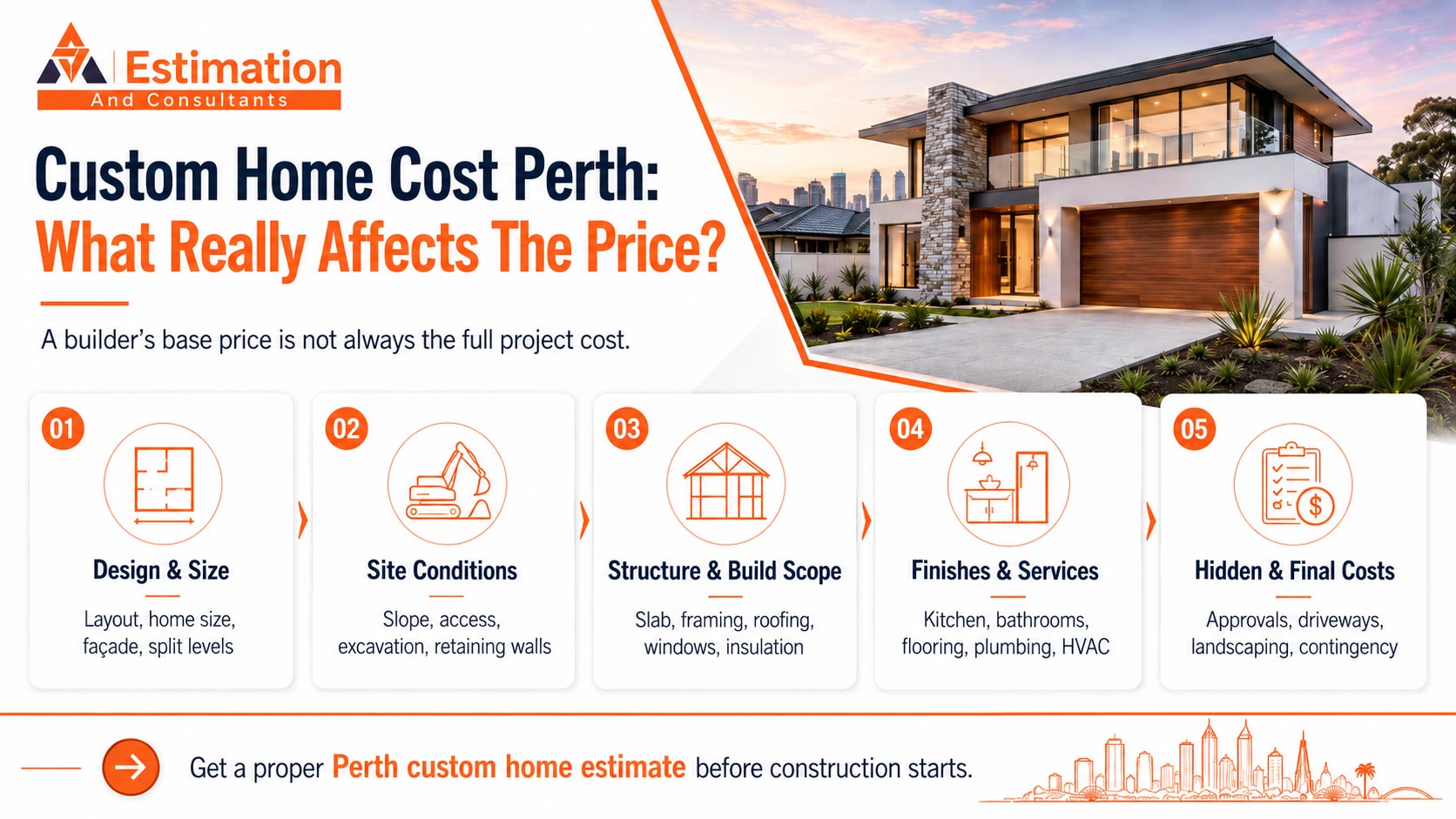
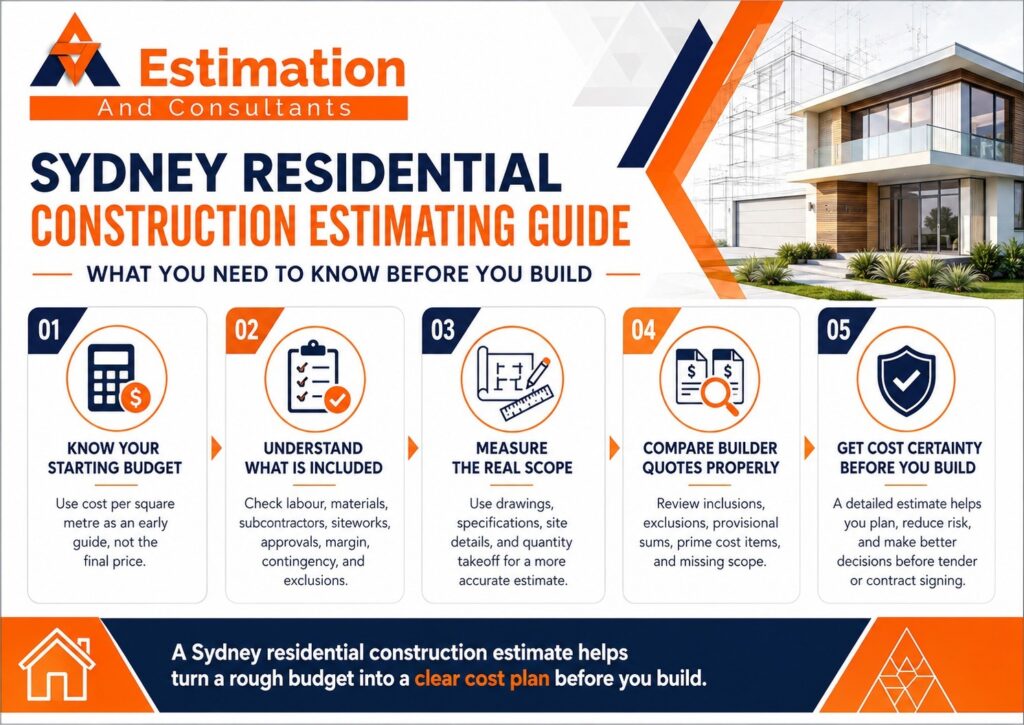
Many homeowners start with a rough budget, but real building costs in Sydney depend on much more than the size of the home. Scope, site conditions, drawings, materials, labour, approvals, and builder pricing can all change the final figure. That is why Sydney residential construction estimating is important before you build, renovate, extend, or compare builder quotes.
This Sydney residential construction estimating guide explains how a proper house construction estimate in Sydney is prepared before work begins. It covers practical estimating steps used in pre-construction budgeting in Sydney, residential cost planning in NSW, and cost certainty before builder selection. With the right Sydney home build estimate, you can plan with more confidence and avoid costly surprises.
Reviewed By Estimator: This guide is based on practical residential construction cost estimating Sydney steps used before tendering, budgeting, and builder quote comparison.
What Is Residential Construction Estimating In Sydney?
Sydney residential construction estimating is the process of working out the likely cost of a home project before building starts. It turns drawings, specifications, site details, labour rates, material quantities, and subcontractor prices into a clear cost plan. This helps with residential budgeting and forecasting before major money decisions are made.
A proper home construction estimate in Sydney is not the same as a quick guess. A rough number may only give a broad idea, while a measured construction cost estimate in NSW is built from real project details. This is why residential construction cost estimating in Sydney matters for cost planning for residential construction in Sydney.
- Clear Cost Planning: A residential estimator in Sydney reviews the project scope, drawings, site information, and pricing details so the owner can understand the likely budget before tender or construction.
- Measured Estimate, Not Guesswork: A measured estimate uses quantities, labour, materials, and subcontractor pricing. A rough guess usually misses important details and can lead to budget stress later.
- Better Financial Decisions: Sydney residential construction financial planning helps homeowners, builders, and developers compare options, check affordability, and reduce the chance of cost surprises.
Why A Rough Budget Is Not Enough
A rough building estimate in Sydney can be useful at the very start, but it should not guide final decisions. Early home budget Sydney figures often miss site preparation and excavation costs, service connections, approvals, finishes, variations, and contingency and risk allowances. Without proper scope definition and estimate validation, the budget may look safe on paper but fail once real pricing starts.
- Hidden Site Costs: Siteworks, excavation, drainage, access issues, and service connections can change the final cost. These items are often missed in a pre-build estimate in Sydney.
- Missing Scope Details: If drawings, finishes, fixtures, or inclusions are unclear, the estimate may leave out important work. This makes cost certainty before residential construction in Sydney harder to achieve.
- Weak Risk Planning: Residential construction budgeting in NSW should include contingency and risk allowances. Without them, small changes can quickly become expensive variations during the build.
What Should A Sydney Residential Construction Estimate Include?
A good estimate should give a clear Sydney residential construction cost breakdown, not just one total price. It should show direct construction costs, labour, materials, subcontractors, siteworks, approvals, preliminaries, builder margin, contingency, and exclusions. This helps homeowners understand their residential construction budget in NSW before they commit to a builder.
A strong estimate should clearly show what is included, what is excluded, and what is only allowed as a provisional amount. This makes home construction pricing in Sydney easier to compare and helps reduce confusion during tender review, contract checks, and early budget planning.
- Clear Cost Groups: A professional estimate should separate labour, materials, subcontractors, approvals, site costs, preliminaries, margin, and contingency so the owner can see where the money is going.
- Better Budget Control: A detailed house build cost breakdown in Sydney helps homeowners compare quotes, check missing items, and make better decisions before construction starts.
- Less Risk Before Tender: Clear pricing, exclusions, and allowances support residential construction budgeting in NSW and reduce the chance of cost surprises later.
Labour, Materials, And Subcontractor Costs
Labour, materials, and subcontractor costs are the core parts of most residential estimates. Labour and material cost analysis looks at how much work is needed, how long it may take, and what materials are required. Quantity takeoff for residential construction helps measure items properly before prices are added.
- Labour Costs: A labour cost estimate for Sydney should consider trade rates, work difficulty, site access, productivity, and project timing.
- Material Costs: A material cost estimate Sydney should include quantities, supplier pricing, delivery, waste allowance, and current market changes.
- Subcontractor Pricing: Subcontractor pricing in Sydney can affect plumbing, electrical, roofing, concreting, excavation, joinery, and finishing costs. Independent estimating services in Sydney can help check if these prices are realistic.
Siteworks, Excavation, And Access Costs
Site preparation and excavation costs can change a budget quickly. A flat, easy-access block is usually simpler to estimate than a sloped block with rock, drainage issues, retaining walls, demolition, or tight street access. That is why estimating siteworks and excavation for Sydney homes should always be part of the residential construction cost breakdown.
- Ground Conditions: An excavation cost estimate for Sydney should allow for soil type, rock risk, drainage, fill removal, and foundation preparation.
- Access Issues: Site access can affect labour, delivery, machinery use, storage, and safety setup. Tight access may increase the residential groundworks estimate.
- Risk Allowances: Sydney house build cost forecasting should include contingency and risk allowances for unknown site conditions, especially before final engineering and site checks are complete.
Approvals, BASIX, NCC, And Compliance Allowances
Sydney residential projects may need cost allowances for BASIX, NCC-related requirements, consultant reports, council approvals, certificates, and infrastructure-related costs. BASIX supports sustainability requirements for NSW residential buildings, while the NCC sets technical rules for building design, performance, construction, and compliance.
- Compliance Costs: A BASIX cost estimate for Sydney may include consultant input, energy ratings, water efficiency items, insulation, glazing, and design changes needed for approval.
- Council and Reports: A council approval cost estimate for Sydney may include planning fees, certificates, engineering, survey, stormwater reports, and other project documents.
- Early Cost Planning: Pre-construction cost planning for Sydney residential projects should include BASIX and NCC compliance costs early, not after the design is already fixed.
Contingency, Risk Allowances, And Exclusions
A good estimate should protect the homeowner from hidden cost surprises. Contingency and risk allowances cover uncertain items, while exclusions explain what is not included in the price. This supports scope definition and estimate validation before tender, builder selection, or contract signing.
- Contingency Planning: A home build contingency in Sydney gives the budget some protection against unknown site conditions, price changes, design changes, or missed details.
- Clear Exclusions: Estimate exclusions. Sydney should be listed clearly so the owner knows what may need extra money later.
- Budget Confidence: Construction budget planning before tender in Sydney helps create cost certainty before residential construction in Sydney and supports stronger Sydney residential construction financial planning.
Sydney House Build Cost Per Square Metre
As a 2026 working guide, Sydney house build cost per m² can sit around $2,500–$5,500 per m² for many standard to mid-range homes, while custom, luxury, or difficult-site builds can reach $6,000–$7,600+ per m². Use this as a starting point only, not a final house building cost estimate, Sydney, NSW.
- Standard Sydney Build Range:
For basic planning, a residential cost per sqm in Sydney range of $2,500–$5,500 per m², is a practical guide. Some NSW guides show wider ranges from about $2,200 per m², but Sydney metro projects often sit higher because of labour, access, compliance, and site conditions. - Common Mid-Range Price:
A realistic mid-range home build rate in Sydney is often around $4,000–$5,000 per m². Hipages reports Sydney homes are commonly built around $4,000–$4,250 per m², while Rawson Homes places a standard 2026 Sydney build around the $5,000 per m² level. - Custom And Luxury Homes:
Custom homes cost more because the design, structure, finishes, windows, joinery, and site work are less standard. For custom home estimate Sydney planning, allow roughly $5,500–$7,600+ per m², especially where premium finishes or complex construction details are involved. - Why Similar-Sized Homes Cost Differently:
Two homes with the same floor area can have very different prices. Project home vs custom home pricing changes with slope, soil, rock, access, roof design, structural steel, wet areas, finishes, BASIX/NCC items, and builder inclusions. - Use m² Rates Carefully:
Sydney’s build cost per square metre residential rates are useful for early budgeting, but they are not enough for final decisions. A proper residential construction scope and pricing Sydney review should include drawings, specifications, site details, quantities, labour, materials, subcontractors, margin, and contingency. - Best Budget Rule:
Use the m² rate to set the first budget, then move to a measured estimate. For real cost certainty, the next step is a quantity takeoff, BOQ, and a full Sydney residential construction pricing guide based on your own plans and site conditions.
The Residential Estimating Workflow In Sydney
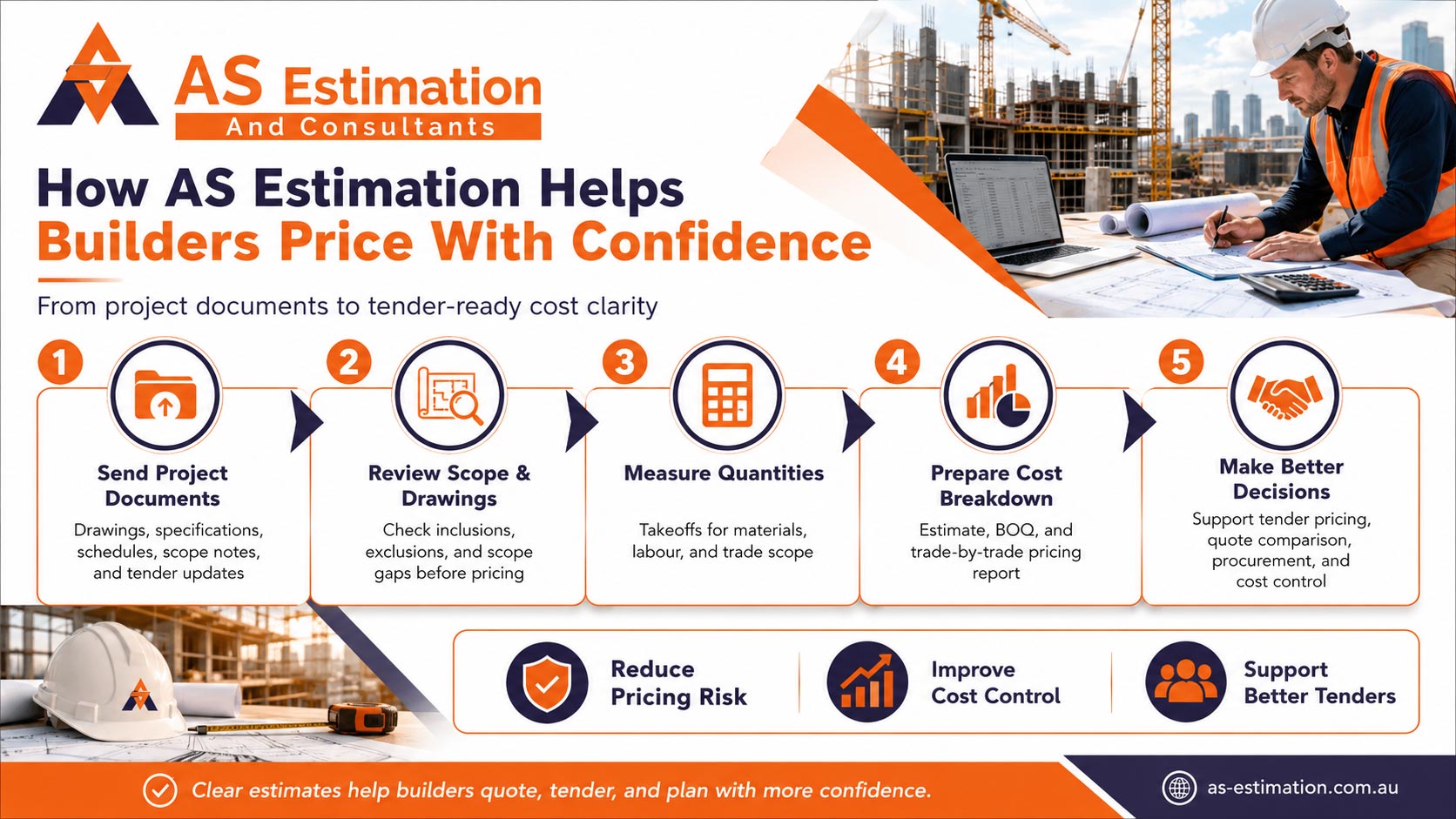
A good residential estimating workflow in Sydney follows clear steps: review documents, define the scope, measure quantities, price labour and materials, add allowances, review risks, and validate the final estimate. This matters because Australian construction costs still face pressure, and Sydney projects need careful pre-construction cost planning before tender.
- Review Plans, Scope, And Site Details:
The house estimating process in Sydney starts with a proper construction plan review in Sydney. This includes architectural drawings, engineering plans, soil reports, survey details, site photos, finishes schedules, and builder inclusions. Good scope definition and estimate validation help create a more reliable house plan estimate in Sydney before pricing begins. - Define What Is Included:
Residential construction scope and pricing in Sydney should be clear before any rates are applied. The estimate should show what is included, what is excluded, and what needs more information. This supports cost planning for residential construction in Sydney and reduces confusion during builder quote comparison. - Complete Quantity Takeoff And BOQ Preparation:
Quantity takeoff and BOQ preparation measure the real work needed, including concrete, steel, timber, masonry, roofing, plasterboard, finishes, fixtures, services, and external works. Residential BOQ services in Sydney help turn drawings into measured quantities for a stronger home construction takeoff in NSW. - Price Labour, Materials, And Subcontractors:
After quantities are measured, the estimator adds labour rates, supplier prices, subcontractor inputs, preliminaries, builder margin, and contingency. Labour and material cost estimating service in Sydney should reflect current residential pricing, construction cost rates in Sydney, and real procurement and subcontractor pricing. - Add Allowances And Review Risks:
Tender-ready residential cost planning should include allowances for uncertain items, site access, design gaps, services, market changes, and construction risks. This step protects the residential cost planning steps from becoming too low or unrealistic before tender. - Validate The Final Estimate:
The final construction estimate workflow in NSW should be checked against the drawings, scope, quantities, rates, allowances, and exclusions. This helps with estimating residential projects in Sydney and gives homeowners a clearer view of the likely budget before they speak with builders.
Estimator’s Tip: The estimate is only as reliable as the drawings, specifications, and site information behind it.
Estimating New Builds, Renovations, And Extensions In Sydney
Estimating changes by project type because each build carries different cost risks. A new home estimate Sydney is not the same as a renovation estimate Sydney, extension cost estimate Sydney, or duplex cost estimate Sydney. In Sydney, approvals, labour demand, compliance, site access, and market pricing can all affect the final budget, so the estimate must match the real project scope. ABS building approval data also shows residential activity and values shift month by month, which is why current pricing checks matter.
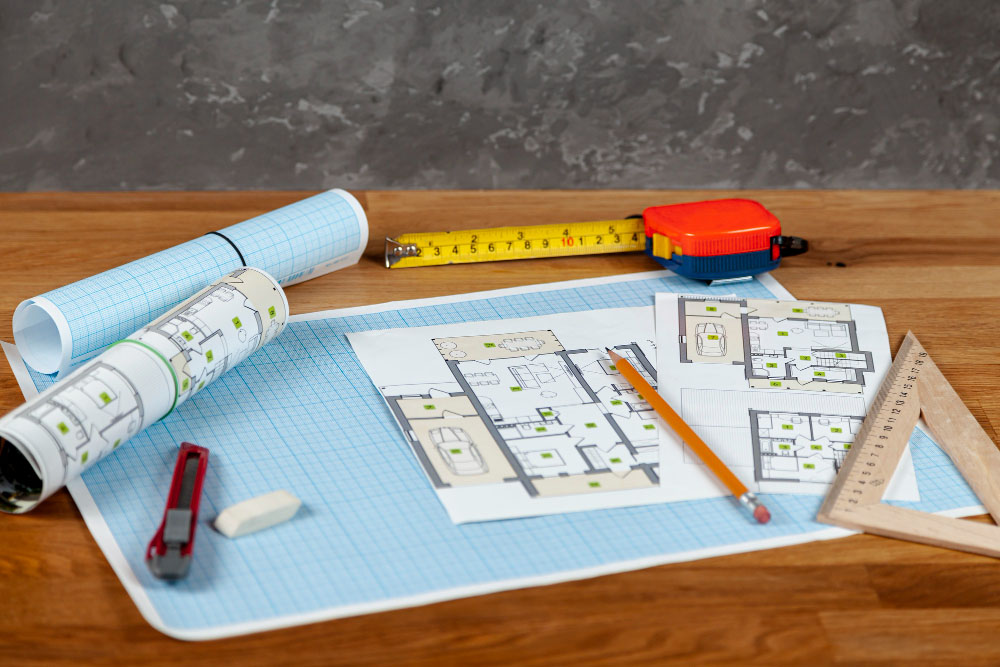
- Project Type Changes: The Estimate
Project home cost estimating in Sydney is usually more predictable because the design and inclusions are often standard. Custom homes, renovations, extensions, duplexes, and developer feasibility projects need more detailed checks. Each project type needs its own scope, drawings, site review, risk allowance, and pricing method. - Market Conditions Matter:
Sydney construction pricing can move with labour demand, material supply, approval activity, and builder capacity. RLB notes that Australian construction remains under cost pressure, with tight labour supply and procurement pressure still affecting pricing outcomes. This makes feasibility cost planning in Sydney more important before tender or finance decisions. - Common Estimating Mistake:
Many budgets go wrong when owners use one rate for every project type. A project home, custom home, renovation, extension, and duplex do not carry the same risk. Residential estimating services for developers in Sydney and homeowners should check the scope, site risks, exclusions, and contingency before relying on the final number.
New Homes And Custom Homes
New homes need clear design, specifications, structural details, site cost allowances, and finish selections before pricing starts. A project builder estimate Sydney may include standard plans and package inclusions, while a custom home cost planning NSW estimate needs more detail because the design is unique. A proper house building cost estimate in Sydney, NSW, should check drawings, engineering, inclusions, site conditions, finishes, and builder assumptions before the owner compares prices.
- Project Homes Are More Standard:
Project home cost estimating in Sydney is usually easier because many items are already selected, such as standard plans, base inclusions, common materials, and set upgrade options. The risk comes when site costs, upgrades, council needs, BASIX items, or exclusions are not clearly priced. - Custom Homes Need More Detail:
A custom home estimating guide Sydney should allow for unique layouts, complex rooflines, larger windows, structural steel, premium finishes, joinery, and special design features. Project home vs custom home pricing often goes wrong when a custom design is priced like a standard package home. - Where New Build Estimates Go Wrong:
New house estimate Sydney budgets often fail when finishes are not selected, engineering is incomplete, site costs are guessed, or provisional sums are too low. Good house build cost planning in Sydney needs a clear scope definition, estimate validation, and realistic allowances before tender. - Compliance Can Affect Pricing:
New homes in NSW may need BASIX and NCC-related allowances. BASIX forms part of the NSW residential development assessment and covers sustainability items such as energy, water, and thermal performance. These items can affect materials, glazing, insulation, fixtures, and design decisions.
Renovations And Extensions
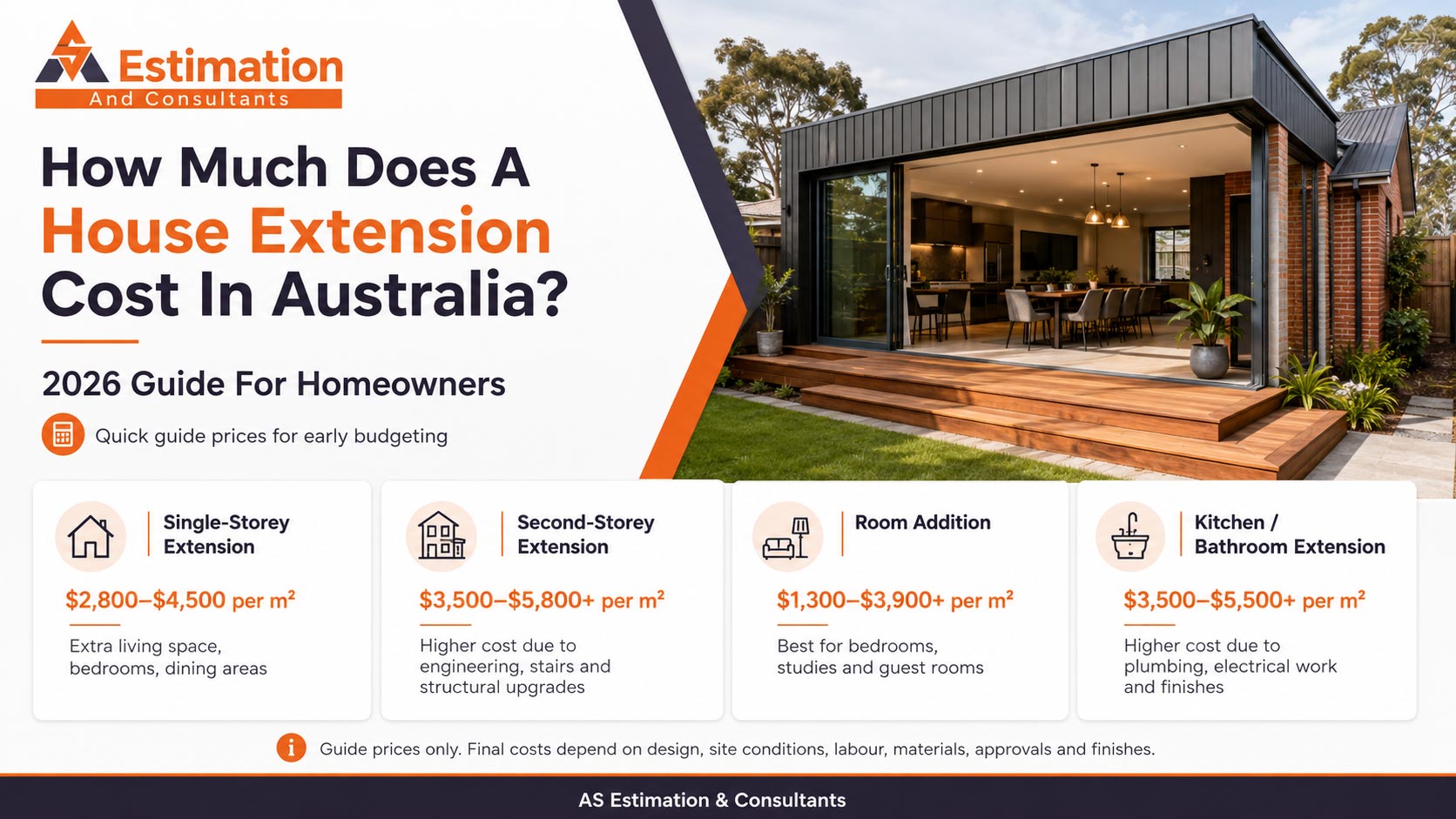
Renovation and extension estimating in Sydney needs more risk planning because existing homes can hide problems. A home renovation estimate Sydney or house extension estimate Sydney should allow for demolition, access limits, structural changes, service upgrades, old plumbing, old wiring, waterproofing issues, and hidden damage. This is why alteration cost planning in NSW often needs stronger contingency and risk allowances than a simple new build.
- Existing Homes Carry Hidden Risk:
Renovations can reveal problems after work starts. Old framing, weak foundations, water damage, asbestos risk, poor drainage, and outdated services may not be clear during early pricing. This makes residential construction estimate validation in Sydney very important before the owner accepts a quote. - Extensions Need Site And Structure Checks:
A house extension estimate Sydney should include site preparation and excavation costs, connection to the existing structure, roof tie-ins, drainage, access, service relocation, and temporary protection. These items are easy to miss if the estimate only focuses on the new floor area. - BASIX May Apply To Alterations:
In NSW, BASIX can apply to alterations and additions, and the NSW Planning Portal notes that these assessments look at energy, glazing, insulation, lighting, hot water, water fixtures, pools, and spas. This means that when estimating renovations and extensions, Sydney should include possible compliance-related costs early. - Where Renovation Estimates Go Wrong:
Renovation budgets usually fail when the estimate ignores hidden damage, service upgrades, demolition, access limits, and contingency. Residential construction budgeting in NSW should include realistic risk allowances because existing homes rarely price as cleanly as new homes on clear sites.
How To Compare Builder Quotes With A Residential Estimate
Comparing builder quotes is not about picking the lowest price. A proper contractor quote comparison checks inclusions, exclusions, provisional sums, prime cost items, site allowances, specifications, and missing scope. In Sydney, this matters even more because construction pricing is still affected by labour supply, procurement pressure, and market capacity. A residential estimate gives you a clear base for a construction quote comparison in NSW before you sign anything.
- Compare The Same Scope:
Use the residential estimate as your base document. Check each quote against the same drawings, finishes, siteworks, services, approvals, and allowances. This makes it easier to compare builder quotes in Sydney without being misled by one quote that looks cheaper because key items are missing. - Check The Inclusions First:
Builder quote review Sydney should start with what is included in the price. Look for structure, finishes, fixtures, site preparation, excavation, drainage, service connections, preliminaries, builder margin, and approval-related costs. A higher quote with clear inclusions may be safer than a lower quote with vague details. - Read The Exclusions Carefully:
Exclusions can become extra costs later. Common quote exclusions in NSW may include rock removal, retaining walls, landscaping, driveways, service upgrades, council conditions, or premium finishes. Residential construction estimate validation in Sydney helps show whether these missing items are likely to affect the real project cost. - Review Prime Cost Items:
Prime cost items usually cover fixtures, fittings, appliances, or items that the owner selects after signing. HIA explains that these allowances generally cover supply only, so the allowance must match the quality level the owner expects. Low allowances can create upgrade costs later. - Review Provisional Sums:
Provisional sums are allowances for work that cannot be fully priced at the contract stage. They are common for items such as excavation or unknown site conditions. If the allowance is too low, the quote may look cheaper than the real final cost. - Use A Practical Quote Checklist:
Before choosing a builder, check drawings, specifications, inclusions, exclusions, site costs, provisional sums, prime cost items, approvals, finishes, preliminaries, margin, contingency, payment stages, and variation rules. This simple tender review Sydney homes process supports better construction budget planning before tender Sydney.
Check Inclusions, Exclusions, And Provisional Sums
Builder quotes can look cheaper when important items are excluded or under-allowed. That is why scope definition and estimate validation matter. A proper contractor estimate review Sydney homes should check whether the quote covers the full residential construction scope and pricing Sydney, including siteworks, service connections, approvals, finishes, provisional sums, prime cost items, and contingency and risk allowances. NSW guidance also notes that written contracts are required for residential building work over $20,000, which makes clear that contract and quote detail important before signing.
When To Get An Independent Estimate
An independent estimate is useful before tender, builder selection, contract signing, bank finance, or major design changes. Independent estimating services in Sydney give homeowners a clear benchmark before comparing quotes. This helps with cost certainty before builder selection because residential estimating services in Sydney check the real scope, quantities, labour, materials, site costs, and allowances instead of relying only on the builder’s final number. A home estimate service in Sydney is especially useful when quotes are far apart or when the lowest price looks unclear.
How To Keep Your Residential Construction Budget Under Control
Keeping a home construction budget in NSW under control starts before work begins. Most budget issues start before construction, when the scope is unclear. Good residential cost control in Sydney means finalising drawings, choosing finishes early, checking quotes properly, keeping contingency, and tracking every change against the original estimate.
Sydney home construction budgeting guide work should not rely on hope or loose allowances. A tender-ready residential cost plan gives you a clear base to manage costs, compare builders, and avoid surprises. Strong construction cost control strategies support better Sydney residential construction financial planning from tender to handover.
- Finalise The Scope Early:
A clear scope helps prevent cost movement. Lock in drawings, specifications, fixtures, finishes, siteworks, and inclusions before tender. This gives better cost certainty before residential construction in Sydney. - Avoid Vague Allowances:
Low or unclear allowances can make the budget look safe at first. Check prime cost items, provisional sums, site costs, and finish allowances before accepting a quote. - Choose Finishes Before Tender:
Tiles, flooring, tapware, appliances, doors, windows, joinery, and external finishes can change the final cost. Early choices support stronger residential budgeting and forecasting. - Compare Quotes Properly:
Do not compare only the final price. Check inclusions, exclusions, site allowances, builder margin, contingency, and payment stages against the original estimate. - Keep A Real Contingency:
Every project needs a buffer for design changes, price movement, site risks, and missed details. This is a key part of Sydney house build cost forecasting. - Track Variations Closely:
Compare every variation against the original estimate and contract scope. This helps you control building costs in Sydney instead of losing track during construction.
Finalise Scope Before Tender
Finalising the scope before tender is one of the simplest ways to reduce variations. Unclear drawings, incomplete finishes, missing fixtures, weak site details, and late design changes all create cost movement. A tender-ready estimate Sydney should include scope definition and estimate validation, so the residential construction scope and pricing Sydney are clear before builders submit prices.
Good pre-tender budget planning in Sydney means the builder prices the real project, not a half-finished idea. This supports pre-construction cost planning for Sydney residential projects and gives the homeowner a stronger final scope estimate in NSW before tender, finance, contract review, and construction start.
FAQs
A residential construction estimate in Sydney is accurate when the drawings, specifications, site details, and finishes are clear. If the scope is still loose, the estimate will be more of an early budget guide. A detailed estimate with quantity takeoff, labour pricing, material rates, and risk allowances gives a much stronger cost picture.
A Sydney residential construction estimate should include labour, materials, subcontractors, siteworks, excavation, approvals, preliminaries, margin, contingency, and exclusions. It should also show what is included, what is not included, and what is only allowed as a provisional amount. This helps homeowners compare builder quotes with more confidence.
Builder quotes for the same home look different because each builder may include different items, allowances, margins, and exclusions. One quote may include excavation, drainage, and finishes, while another may leave them out. This is why quote comparison should focus on scope, not just the final price.
Yes, you should get an estimate before choosing a builder because it gives you a clear cost benchmark. An independent residential estimate helps you see whether builder quotes are realistic, too low, or missing key items. It also supports better budget planning before tender, finance, or contract signing.
Cost per square metre is useful for early Sydney home budgeting, but it is not enough for a final decision. It does not fully account for site conditions, design complexity, finishes, access, approvals, or builder inclusions. A measured estimate gives a more reliable view of the real project cost.
Renovations and extensions need extra risk allowance because existing homes can hide problems. Old plumbing, wiring, framing, drainage, waterproofing, access issues, and structural changes can affect the final cost. A good renovation estimate should include contingency so the budget is not too tight from the start.
Final Thoughts: Get Cost Clarity Before You Build
A good residential construction estimate is not just a price. It helps you understand the scope, compare builder quotes, plan your budget, and reduce risk before work starts. With proper Sydney residential construction estimating, homeowners and developers can make clearer decisions before tender, finance, or builder selection.
Before you tender, sign with a builder, or finalise your construction budget, get an independent residential construction estimate. It gives you better cost certainty before residential construction in Sydney and helps you understand what your home project is likely to cost.