Canberra construction costs in 2026 need careful planning because the final budget is shaped by more than the building itself. ACT building prices can shift with labour availability, material supply, approval pathways, site conditions, and the level of design detail. For both homeowners and developers, the real challenge is not just understanding the cost to build in Canberra, but understanding what sits behind that number before the project moves too far.
That is why early budgeting matters. A clear Canberra construction budget helps test project feasibility, reduce surprises, and support better decisions before design and tender. Canberra-specific estimating gives clients a more realistic starting point by looking at local pricing, risk, and scope in context. In simple terms, what homeowners should know before they budget is that good planning early usually costs less than fixing budget problems later.
What Construction Costs Look Like in Canberra in 2026
If you are planning a project in the ACT, it helps to start with broad benchmark rates. In 2026, Canberra construction costs vary a lot by building type, level of finish, and site conditions. A simple home, a custom house, a warehouse, and a mixed-use project will all sit in very different pricing ranges, even when the floor area looks similar on paper.
That is why average build cost Canberra figures should be used as a guide, not as a final budget. Canberra build rates can help you set an early direction, but real costs depend on scope, services, design complexity, and delivery risk. Good residential build budgeting and early review of commercial construction costs in Canberra can save time, reduce guesswork, and improve budget decisions from the start.
Residential Cost Ranges
Residential pricing in Canberra is not one-size-fits-all. A standard home usually sits at a lower price point than a custom-designed house because the layout, detailing, and finishes are simpler. Duplex and townhouse projects can also shift in cost depending on shared walls, site access, parking needs, and the level of internal specification. This is why Canberra house construction cost estimating needs to go beyond a rough square metre figure.
Finish levels also make a big difference. A project with standard fixtures and practical materials will land very differently from one with premium joinery, feature façades, upgraded kitchens, or custom bathrooms. For that reason, residential construction costs ACT should always be checked against your real brief. Better cost plan accuracy at the design stage helps owners understand the true cost to build in Canberra before drawings move too far ahead.
Commercial and Development Cost Ranges
Commercial construction costs in Canberra can vary even more than residential projects because each asset type has its own build logic. An office project may need higher services, lift access, fit-out allowance, and stronger compliance planning. A warehouse cost Canberra estimate may look lower on the surface, but slab design, loading needs, office space, and fire services can quickly change the total. Retail construction cost in Canberra figures can also rise when shopfront design, services coordination, and landlord requirements come into play.
For developers, broad benchmark rates are useful for early testing, but they should always be tied back to project feasibility. Mixed-use projects, for example, often combine residential, retail, parking, and shared services, which makes budgeting more layered. A practical Canberra developer budgeting guide should explain that Canberra build cost per square metre changes with use type, building form, servicing demand, and approval pathway, not just building size.
Why Cost Per Square Metre Is Only a Starting Point
The Canberra build cost per square metre is helpful at the concept stage, but it should never be treated as the full answer. Square metre rates do not properly reflect sloping land, poor soil, demolition, utility upgrades, stormwater works, or difficult access. They also miss the effect of procurement timing, builder appetite, and changes in labour or material pricing. That is where many early budgets start to drift.
A square metre guide, Canberra works best when it is backed by project-specific thinking. Cost plan accuracy improves when you test the scope, services, finish level, and risk profile before setting the budget. Canberra-specific estimating helps clients understand what affects building costs in the ACT and gives them a stronger base for Canberra project cost planning. In simple words, rates per square metre are useful for starting the conversation, but not for finishing it.
Indicative Canberra Construction Cost Benchmarks in 2026
| Project Type | Indicative Cost Range (Per m²) | Simple Note |
| Standard to Custom Home | AUD 2,100 – 3,600 | Higher finishes, harder sites, and custom design can push costs above the range |
| Duplex / Townhouse | AUD 2,500 – 4,000 | Shared walls help in some cases, but parking, access, and approvals can add cost |
| Office / Retail | AUD 3,000 – 4,800+ | Services, fitout level, compliance, and layout complexity usually drive the difference |
| Warehouse / Industrial | AUD 1,800 – 3,000 | Slab strength, office area, fire services, and external works often change the final rate |
Key Points to Keep in Mind
- Benchmarks Help, But They Do Not Replace A Real Estimate
Use cost per square metre Canberra figures to set direction, not to lock in a final budget. - Project Type Changes Everything
A house, duplex, office, warehouse, or mixed-use development all carry different cost drivers. - Scope And Finish Matter
Better inclusions, more services, and more design detail usually mean higher ACT building prices. - Early Cost Planning Reduces Risk
Strong design-stage cost control makes budgeting clearer and helps prevent surprises later.
The Main Factors That Affect Building Costs in the ACT
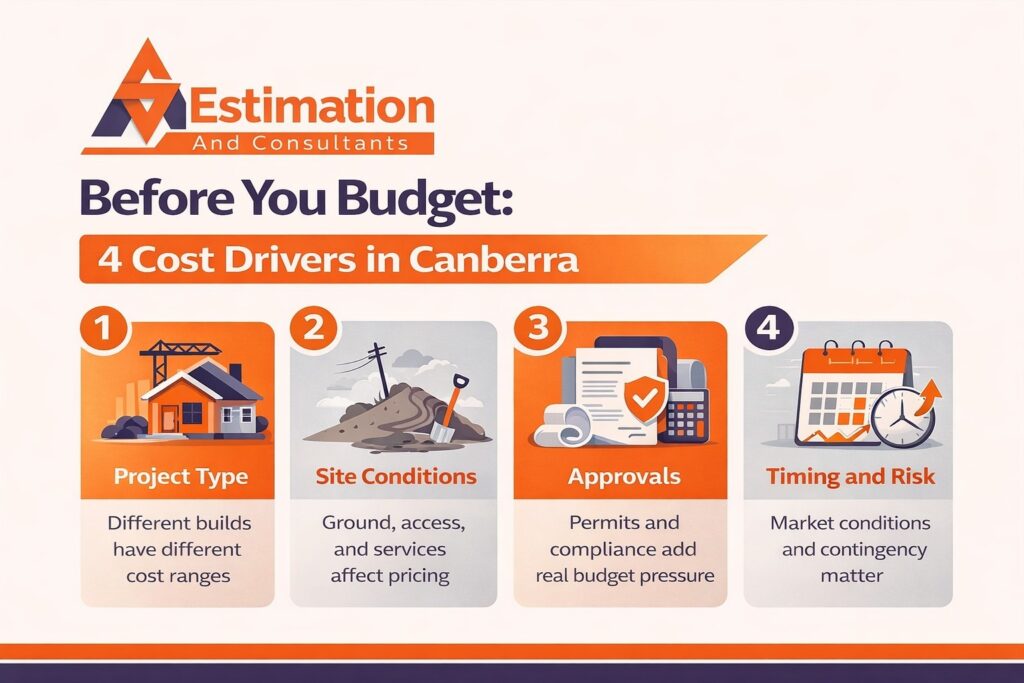
When people ask what affects building costs in the ACT, the answer is usually not just one thing. In Canberra, budgets are shaped by three main groups of cost drivers: market conditions, site conditions, and approval requirements. Each one can move the number up or down, sometimes more than clients expect at the start.
That is why Canberra cost drivers need to be looked at as a full picture. Labour and material cost pressure Canberra, site preparation costs Canberra, and approval and compliance costs ACT all play a part. If you only look at the build rate and ignore the rest, your early budget can feel fine on paper but fall apart later.
Labour, Materials, and Tender Conditions
Market conditions have a direct effect on Canberra construction costs in 2026. Labour rates in Canberra can rise when skilled trades are busy, in short supply, or tied up on other work. Material price movement also changes budgeting fast, especially for steel, concrete, cladding, timber, and mechanical services. Even small changes across these items can add a noticeable amount to the final contract sum.
Tender market ACT conditions matter just as much. When builders are selective, contractor appetite becomes tighter, and pricing often reflects risk, workload, and program pressure. Tender pricing Canberra 2026 is not only about raw rates. It also includes preliminaries and overheads, how long the project will run, and how confident builders feel about the drawings, scope, and delivery timing. This is why builder pricing in Canberra can vary even when two jobs seem similar.
Site Preparation and Servicing
Site-related costs are one of the biggest reasons early budgets change. Two projects with the same floor area can land at very different numbers if one site needs excavation, retaining, demolition, drainage upgrades, or difficult service connections. Site and servicing costs are often less visible at the start, but they can have a major impact on the real cost to build in Canberra.
Site preparation costs in Canberra may include earthworks, temporary access, stormwater control, sewer and water tie-ins, power upgrades, and external works around the building. A tight block, sloping land, poor soil, or limited machine access can push up the excavation budget in Canberra very quickly. Good Canberra project cost planning should test these issues early so the budget reflects the site you actually have, not the site you hope for.
Design, Approvals, and Compliance
Before construction even begins, there are technical and statutory costs that need to be allowed for. These include permits, consultant fees, engineering input, certification, and code-related requirements. Approval and compliance costs ACT can feel like background expenses, but they are a real part of the total budget and should never be treated as an afterthought.
Design-stage cost control matters here because every design choice can affect engineering, documentation, and compliance pathways. Pre-construction budgeting in Canberra should include architect or designer fees, structural and civil input, energy or code reports, permit fees ACT, and any specialist advice needed for the project. Canberra-specific estimating helps clients understand these compliance costs early in Canberra, which makes estimating before building in Canberra much more accurate and much less stressful.
Key Points to Remember
- Market Pressure Changes Pricing
Labour shortages, material swings, and tender timing can all shift builder rates. - The Site Can Change Everything
Excavation, drainage, access, and service connections often move the budget more than expected. - Approvals Are Part of the Build Cost
Permits, consultant fees, and compliance work should be included from day one. - Early Planning Protects The Budget
The more clearly you test market, site, and compliance costs early, the better your budget will hold.
What Homeowners Need to Know Before They Budget
For homeowners, the biggest mistake is starting with a number before the project scope is clear. A smart homeowner budget Canberra starts with knowing what you want to build, how you want it to look, and what level of finish you expect. That is what homeowners should know before they budget.
Residential build budgeting works best when you focus on scope clarity, finish choices, builder quote comparison, and construction contingency planning. If these parts are rushed, Canberra house construction cost figures can look manageable early on, but grow later. Good planning is really about budget blowout prevention, not just finding the cheapest path.
How Finish Levels and Scope Change the Budget
The total cost of a home can vary a lot based on what is included. Kitchens, bathrooms, flooring, façade details, lighting, joinery, and custom features all shape the final number. A practical layout with standard selections will usually sit very differently from a home with premium finishes and one-off design choices. This is why Canberra project cost planning should begin with a clear list of inclusions, not a rough idea.
The scope also changes the cost when the design grows during the process. A larger living area, upgraded windows, feature cladding, better appliances, or extra storage may each seem small on their own, but together they can push the budget well beyond the first estimate. Strong design-stage cost control improves cost plan accuracy and helps owners understand what affects building costs in ACT before they commit too far. That is one of the simplest ways to reduce finish cost Canberra pressure and avoid scope change budget issues later.
Why Quote Comparison Is Not Just About the Lowest Price
A low quote can look attractive, but it does not always mean better value. Two builders may price the same drawings very differently because their quotes include different assumptions, exclusions, provisional sums, or quality levels. That is why builder quote comparison in Canberra should never be based on total price alone. A proper quote review ACT should look at what is actually included and what may still turn into extra cost later.
Homeowners should compare the details behind the number. Look at allowances, timelines, material quality, exclusions, and how clearly each builder has understood the scope. This is a big part of estimating before building in Canberra because it improves cost plan accuracy and supports better construction contingency planning in the ACT. In simple terms, the lowest quote risk Canberra often comes from hidden gaps, not real savings. A careful builder quote comparison gives you a more reliable path and helps protect the budget from avoidable surprises.
Key Things Homeowners Should Keep In Mind
- Clear Scope Comes First
Before you set a budget, be clear about size, layout, finishes, and must-have items. - Finishes Change The Price Quickly
Kitchens, bathrooms, joinery, flooring, and façade choices can shift the budget more than expected. - Do Not Compare Quotes By Price Alone
Check inclusions, exclusions, allowances, and assumptions before choosing a builder. - Hold A Contingency
Even well-planned projects need contingency allowances for unknowns and changes.
What Developers Need to Know Before They Budget
For developers, budgeting is not just about today’s build rate. It is about testing whether the project still works after site costs, delivery risk, timing, and market pressure are added in. A strong developer budget in Canberra starts with project feasibility, not with a rough price pulled from a similar job.
Good developer cost planning means looking at the full picture early. That includes feasibility planning, ACT, preliminaries and overheads, tender market conditions, and realistic risk allowances. A useful Canberra developer budgeting guide should help developers understand whether the scheme is viable, where the pressure points sit, and how tender pricing Canberra 2026 may affect returns before the design is locked in.
Feasibility Planning Before Design Is Finalised
The best time to test costs is before the design goes too far. At this stage, developers should be using concept estimates, scenario testing, and simple option reviews to see how different layouts, yields, and building forms affect the budget. Canberra project cost planning is much stronger when it starts with early-stage development costing Canberra rather than waiting for a near-finished design to reveal problems.
This is where project feasibility and cost plan accuracy matter most. A good concept budget ACT should include infrastructure assumptions, servicing needs, site constraints, and a realistic view of construction complexity. Design efficiency also plays a big role. A cleaner, more buildable design often protects margin better than a scheme that looks impressive but carries a hidden cost. That is why pre-construction budgeting in Canberra should begin with testing ideas, not just pricing drawings.
Tender Risk, Escalation, and Delivery Timing
Even a well-planned project can shift once it reaches the market. Tender market conditions, contractor appetite, and procurement timing all affect what builders are willing to price and how much risk they load into that price. Tender pricing Canberra 2026 is shaped by more than quantities. It is also influenced by labour cost pressure, material price movement, program demands, and how clear the documentation is at the tender stage.
Developers should also allow for an escalation allowance for Canberra and broader procurement risk. If a project is tendered at the wrong time or if the market is tight, the numbers can move quickly. That is why construction contingency planning ACT matters. A sensible strategy includes contingency allowances, realistic delivery assumptions, and awareness of tender timing ACT. In simple terms, timing does not just affect the schedule. It can change the whole commercial outcome of the project.
Key Things Developers Should Keep In Mind
- Feasibility Comes Before Final Design
Test the numbers early so the project works financially before too much time is spent on drawings. - Timing Can Change The Tender Result
Procurement timing, contractor workload, and market confidence all influence price. - Risk Needs Its Own Budget Line
Contingency allowances and escalation planning should be built into the budget, not added later. - Clear Documentation Supports Better Pricing
The better the scope and assumptions are defined, the more reliable the tender outcome tends to be.
A Practical Budget Framework for Canberra Projects
A clear budget framework helps people make better decisions before money is committed. In Canberra, the safest approach is to build the budget in stages. Start with a concept estimate, refine it as the design improves, check it with consultant input, compare quotes carefully, and update allowances as risks become clearer. This keeps the process practical and reduces avoidable surprises.
Pre-construction budgeting in Canberra works best when it is treated as a live process, not a one-time figure. Early numbers are useful, but they should improve as more information becomes available. That is where Canberra-specific estimating, design-stage cost control, and better cost plan accuracy make a real difference. A simple step-by-step budgeting Canberra approach gives both homeowners and developers a stronger base for Canberra project cost planning and budget blowout prevention.
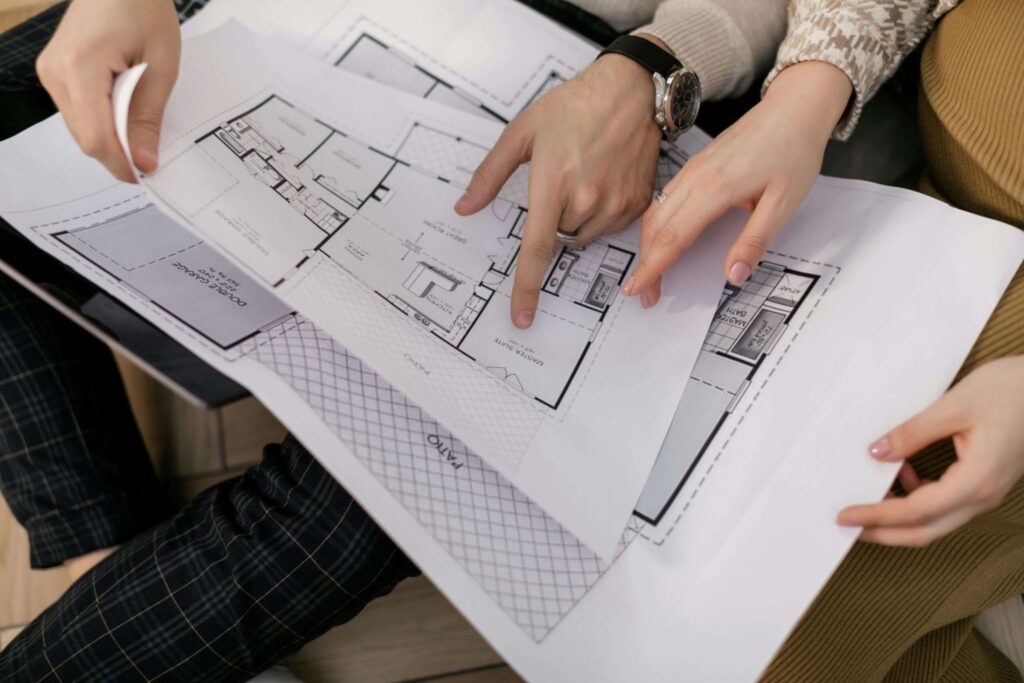
Budgeting Checklist for Homeowners
For homeowners, the budget needs to be built around clarity. Before asking for firm prices, it is important to know what is being built, what level of finish is expected, and what the site may demand. Residential build budgeting becomes much easier when the project brief is clear and the early estimate reflects real choices, not rough assumptions.
A homeowner’s checklist in Canberra should help owners stay practical and avoid common mistakes. The goal is not just to get a price. The goal is to make sure the price is based on the right scope, realistic allowances, and a proper builder quote comparison. That is a big part of what homeowners should know before they budget, and one of the best ways to support construction contingency planning ACT.
- Define The Scope Clearly
Be clear about the home size, layout, number of rooms, finish level, and key features before pricing begins. A vague brief usually leads to a vague budget. - Review The Site Early
Check slope, access, drainage, soil conditions, and service connections as early as possible. Site issues can change the budget more than many owners expect. - Check Allowances Carefully
Look closely at prime cost items and provisional sums. These can make a quote look lower at first, but later push up the final spend. - Keep A Real Contingency
Contingency allowances matter because even well-planned residential projects can face changes, upgrades, or hidden site issues. - Compare Quotes Properly
Builder quote comparison should focus on inclusions, exclusions, assumptions, and quality. The cheapest quote is not always the safest one.
Budgeting Checklist for Developers
For developers, the budget framework needs to do more than price the building. It needs to test whether the project works as a whole. That means looking at project feasibility, approval path, service assumptions, escalation risk, and tender conditions before the design goes too far. Good developer cost planning is really about protecting commercial outcomes, not just setting a target number.
A development budget checklist ACT should also connect early feasibility with delivery reality. Tender pricing in Canberra 2026 can shift with market pressure, contractor appetite, and procurement timing. That is why Canberra project cost planning should include both early testing and later-stage updates. A practical Canberra developer budgeting guide helps teams see where the real risk sits before it becomes a budget problem.
- Test Feasibility First
Review yield, design efficiency, likely cost, and margin before locking in the concept. Early project feasibility testing helps avoid wasted design time. - Check Service Assumptions
Include drainage, utilities, access, authority requirements, and site servicing in the budget from the start. - Map The Approval Path
Allow for approvals, consultant fees, code requirements, and timing. These items affect both cost and program. - Allow For Escalation
Labour cost pressure and material price movement can shift pricing. A sensible escalation allowance helps protect the budget. - Plan Tender Timing Carefully
Tender market conditions can change outcomes quickly. Timing, documentation quality, and contractor interest all influence tender budgeting in Canberra.
Why This Framework Matters
A budget framework is useful because it gives the project a structure. Instead of relying on one early number, it lets the budget grow more accurately as the design, site knowledge, and market information improve. That leads to better decisions, stronger estimate accuracy, and fewer surprises when the project reaches pricing or tender.
In simple terms, estimating before building in Canberra should be a step-by-step process. Homeowners need a clear scope, realistic allowances, and a smart quote review. Developers need feasibility testing, risk planning, and careful timing. When those steps are followed properly, the budget becomes a tool for decision-making instead of a number that keeps moving.
Common Budgeting Mistakes to Avoid
Many budget problems do not start on site. They start much earlier, when the first estimate is built on missing details, weak assumptions, or too much optimism. In Canberra, small planning gaps can grow into real cost pressure once site conditions, approvals, and market pricing begin to affect the job.
That is why budget blowout prevention matters from the start. Owners and developers who understand what affects building costs in the ACT are in a better position to make realistic choices. Estimating before building in Canberra, allowing for approval and compliance costs, and keeping proper contingency allowances all help improve cost plan accuracy and reduce avoidable surprises.
- Underestimating Site Costs
One of the most common budgeting mistakes Canberra clients make is assuming the site will be simple. Excavation, drainage, retaining, demolition, access issues, and service connections can add far more than expected if they are not reviewed early. - Choosing The Lowest Quote Too Quickly
A low quote may look attractive, but it can hide exclusions, weak allowances, or unrealistic assumptions. To avoid build overruns, Canberra projects should compare scope, inclusions, quality, and risk, not just the total number at the bottom of the page. - Forgetting Approval And Compliance Costs
Permit fees, consultant input, certification, engineering, and code-related work are all part of the real budget. When approval and compliance costs are missed early, the project often feels affordable at first and expensive later. - Skipping Contingency Allowances
Construction contingency planning ACT is there for a reason. Even a well-prepared project can face changes, unknown site issues, price shifts, or design updates. Without contingency allowances, there is very little room to absorb normal project risk. - Budgeting Too Late In The Process
Waiting until drawings are advanced before checking costs is one of the most expensive cost planning errors ACT clients can make. Early budgeting helps shape the design before the wrong decisions become harder and more expensive to fix. - Using Benchmark Rates As Final Prices
Square metre guides are useful for a starting point, but they do not replace project-specific costing. Cost plan accuracy improves when benchmark rates are tested against site conditions, scope, services, and delivery risk before the budget is trusted.
FAQs
Canberra construction costs in 2026 depend on the type of project, the level of finish, the site conditions, and the approval requirements. A standard home, a custom house, a townhouse, and a commercial project will all sit in different price ranges. The best way to treat Canberra construction costs is as a planning guide first, then refine the budget with a project-specific estimate.
The cost to build in Canberra can vary a lot depending on whether the project is residential, commercial, or mixed-use. It also changes based on design complexity, materials, labour rates, and site preparation needs. A rough benchmark can help at the start, but a proper estimate is needed before making final budget decisions.
What affects building costs in the ACT the most is usually a mix of labour and material pricing, site and servicing costs, and approval or compliance requirements. In many cases, people focus only on the building rate and forget about excavation, drainage, permits, consultant fees, and contingencies. Those hidden items are often what move the budget the most.
Cost per square metre is only a starting point because it does not fully capture the real details of a project. It does not show the effect of slope, poor soil, difficult access, service upgrades, finish level, or procurement risk. It is useful for early direction, but it should never be treated as the final budget.
How much contingency you should allow in your construction budget depends on how complete the design is and how much uncertainty exists in the project. If the scope is still changing or the site is not fully understood, the contingency usually needs to be higher. A contingency is there to protect the project from normal risk, not because the estimate is wrong.
Conclusion: Better Cost Planning Starts Before the First Quote
Canberra construction costs in 2026 are shaped by more than just the builder’s rate. Site conditions, approvals, finish levels, market timing, and risk allowances all play a part. That is why what homeowners should know before they budget is simple: the earlier the cost planning starts, the stronger the decisions become.
A local cost plan gives the project a better foundation. Canberra-specific estimating improves cost plan accuracy, supports project feasibility, and helps both homeowners and developers move into design or tender with more confidence. If you want practical Canberra budget planning help, an ACT construction estimate prepared early can save time, reduce risk, and give you clearer pre-build cost advice in Canberra.