A construction cost plan is a clear budget guide that shows what a building project is likely to cost before work starts. It breaks the project into simple cost categories and helps check whether the design matches the available budget.
In simple terms, what is a cost plan in construction? It is a structured document used for project budgeting before construction starts. A good construction cost plan supports better pre-construction budgeting, clearer project budget forecasting, and stronger construction financial planning from the beginning.
What Does A Cost Plan Mean In Simple Terms?
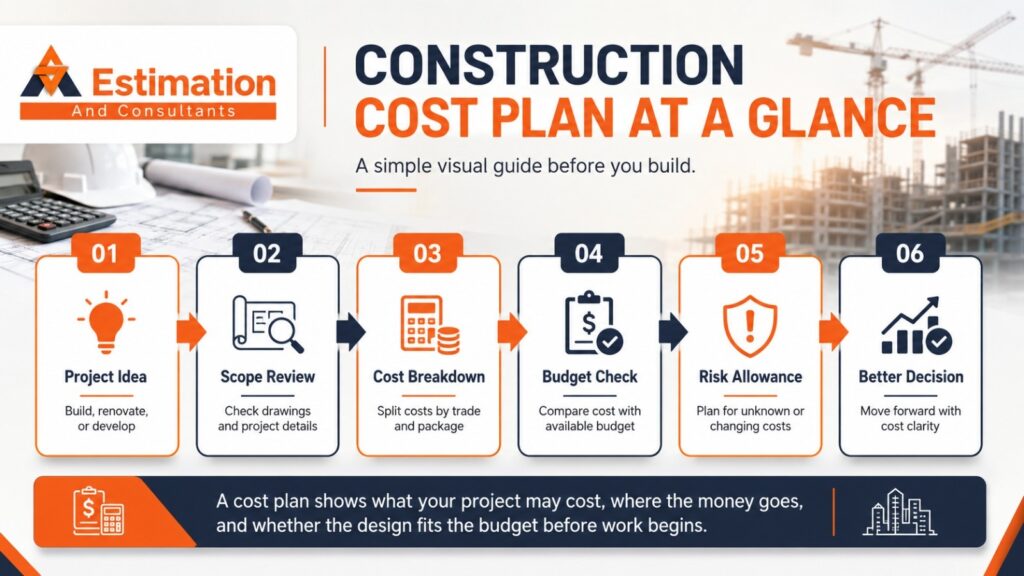
A cost plan is a clear money guide for your build. It shows what the project may cost, where the money will go, and whether the design fits the budget. Think of it as project budgeting before construction starts, not after problems appear.
- Likely Project Cost:
A cost plan gives early project budget forecasting so a homeowner, builder, or developer can see the expected cost before making big decisions. - Where The Money Goes:
It breaks down spending across labour, materials, trades, finishes, and other project needs, making the construction budget explained in simple terms. - Design And Budget Match:
It checks the scope definition and budget alignment to see whether the current design is realistic for the available budget. - Better Pre-Build Decisions:
Good pre-construction budgeting helps you adjust the design, materials, or scope before costs become harder to control. - Simple Real-Life Example:
A homeowner planning a renovation can use a cost plan to decide if their design is affordable before hiring trades or starting work. - Stronger Cost Control:
With proper construction cost forecasting and planning, the cost plan supports better construction budget management from the start.
Why Is A Cost Plan Important In Construction?
A cost plan is important because it helps you see the money side before the project goes too far. It supports cost planning to prevent budget blowouts, gives better budget certainty, and helps the design team make practical choices before tender or construction starts.
- Clearer Cost Picture:
A cost plan gives owners a simple view of expected costs, so they are not making decisions with rough guesses. - Fewer Budget Surprises:
Good construction cost certainty planning helps identify missing costs, weak allowances, and design choices that may push the budget higher. - Better Design Decisions:
When the team understands the budget early, they can adjust materials, finishes, or scope before changes become expensive. - Stronger Tender Confidence:
A cost plan supports cost certainty before tender, so owners can review contractor prices with more confidence. - Lower Variation Risk:
Proper contingency and risk allowances help with variation risk reduction and make it easier to avoid construction cost overruns. - Better Cost Control:
With strong construction budgeting and cost control, the project has better construction budget management from planning through completion.
What Does A Construction Cost Plan Include?
A construction cost plan includes the main costs needed to understand the project budget before work starts. It usually covers trade costs, labour, materials, subcontractors, equipment, preliminaries, contingency, and risk allowances. The exact cost plan inclusions depend on the project stage, drawing detail, scope clarity, and available documents.
A detailed cost plan for construction gives a clean construction cost breakdown so owners can see where the money is likely to go. It may also support construction financial planning and forecasting, especially when the project needs staged payments, tender checks, or better budget control before construction begins.
Trade And Work Package Costs
Trade and work package costs show the project cost by construction activity. This may include site works, concrete, framing, roofing, plumbing, electrical, finishes, landscaping, and external works. This construction cost breakdown by trade helps owners, builders, and developers understand which parts of the project carry the highest cost.
A clear, detailed trade cost breakdown also makes the budget easier to review. When linked with bill of quantities integration, the cost plan can show measured work items and expected pricing in a more organised way. This helps reduce confusion and gives a more practical view of the full building cost breakdown.
Labour, Materials, And Subcontractor Costs
Labour, materials, and subcontractor costs are the direct costs needed to complete the work. Labour covers the people on site. Materials cover items like concrete, timber, steel, fixtures, and finishes. Subcontractor costs may include plumbers, electricians, roofers, tilers, painters, and other specialist trades.
Good labour and material cost analysis supports better construction cost forecasting and planning. It also improves the accuracy because the cost plan is based on real project needs, not just rough guesses. This is where accurate construction budgeting services can help create a more reliable project cost breakdown.
Contingency And Risk Allowances
A cost plan should also include contingency and risk allowances. These are amounts set aside for unknowns, such as design changes, incomplete drawings, site issues, material price changes, or unexpected work. This does not mean the project should spend the extra money. It means the budget is prepared for possible risks.
Proper construction contingency helps with cost planning to prevent budget blowouts. It gives the owner more construction cost certainty planning before tender or construction starts. With smart cost benchmarking and forecasting, the risk allowance can be realistic instead of too low or too high. This supports stronger variation risk reduction.
When Is A Cost Plan Prepared?
A cost plan can be prepared at different stages of a project, but it is most useful before major money decisions are made. A good pre-construction cost plan helps owners check the budget before design approval, tender submission, contractor selection, or construction work begins.
The right timing depends on the project stage. Early plans may use rough information, while later plans use detailed drawings and scope notes. This staged approach supports project lifecycle budgeting, design-stage cost control, and better tender cost planning and validation.

Before Design Is Finalised
Before the design is finalised, an early cost plan helps test whether the project idea is realistic. This is often called feasibility cost planning. It gives the owner a clear starting point before spending heavily on detailed drawings, approvals, consultants, or contractor discussions.
A feasibility stage cost plan can show whether the expected project cost matches the available budget. For a homeowner, this may mean checking if a renovation is affordable. For a developer, it may support project feasibility analysis and better project budgeting before construction starts.
During Design Development
During design development, the cost plan should be updated as the drawings become clearer. New material choices, structural details, finishes, room sizes, and scope changes can all affect the final price. This is where cost planning during design development helps keep the design close to the budget.
Good design-stage cost control helps the owner and design team make better choices before the project moves too far. If the budget is under pressure, value engineering and cost optimisation can help adjust materials, layout, or scope without losing the main project purpose.
Before Tender Submission
Before tender submission, a cost plan helps check whether the project budget is ready for contractor pricing. This pre-tender cost plan gives the owner a realistic benchmark before comparing quotes. It also supports procurement and tender preparation by making the pricing process clearer.
Strong tender cost planning and validation can reduce the risk of accepting a price that is too high, too low, or missing key scope items. With proper contractor pricing analysis, the owner gets better cost certainty before tender and can make a more informed decision.
Cost Plan Vs Estimate In Construction
A construction estimate predicts the likely cost of the work. It is often used to give an early price idea based on the available drawings, scope, or project details. An estimate is useful, but it usually gives a cost figure rather than a full budget control path.
A cost plan goes further. It organises the budget, checks scope definition and budget alignment, and can be updated as the design becomes clearer. In simple terms, the cost estimate vs cost plan difference is this: an estimate tells you what the work may cost, while a cost plan helps manage the money throughout the project.
| Point Of Difference | Construction Estimate | Construction Cost Plan |
| Main Purpose | Predicts the likely project cost | Organises, tracks, and controls the project budget |
| Timing | Often prepared early or for pricing | Used across the design, tender, and construction stages |
| Detail Level | May be broad or item-based | Usually includes a clearer project cost structure |
| Budget Control | Helps with price understanding | Supports construction budgeting and cost control |
| Updates | Maybe a one-time cost check | Can be updated as the scope and design develop |
| Best Use | Useful for quick cost guidance | Useful for stronger construction budget management |
A clear construction estimate and cost plan comparison helps owners choose the right tool. If you only need a rough price, an estimate may be enough. If you need better budget control, tender confidence, and estimate accuracy improvement, a cost plan gives a more complete view.
Who Prepares A Cost Plan?
A cost plan is usually prepared by a quantity surveyor, construction estimator, cost consultant, or an independent estimating team. These professionals review drawings, scope, materials, labour, and market rates to give the owner a clearer budget view before tender or contract decisions.
- Quantity Surveyors:
Quantity surveyor cost planning services help measure work, review documents, and prepare a structured cost plan based on project scope. - Construction Estimators:
A building estimator checks labour, materials, trades, and project details to support more accurate construction budgeting services. - Cost Consultants:
A construction cost consultant can provide cost benchmarking and forecasting to compare the project budget with similar completed projects. - Independent Estimating Services:
Independent construction estimating services can give a more objective cost view before choosing a builder or accepting a tender price. - Builders And Contractors:
Builders may prepare cost information, but their pricing is often linked to their own delivery method, margins, and subcontractor rates. - Document Review Experts:
Good cost planning also needs scope validation and documentation review to find missing details before they become budget problems.
Who Needs A Construction Cost Plan?
A construction cost plan is useful for anyone who needs clear numbers before making a building decision. This includes homeowners, builders, developers, architects, investors, and project managers. It helps with scope definition and budget alignment, so the project does not move ahead on guesswork.
Cost plans are used in both residential and commercial cost planning. They can support a home build, renovation, extension, commercial project, or development. The goal is simple: check the budget, test the project, and make better choices before construction costs become harder to control.
Homeowners And Renovators
Homeowners can use a cost plan for residential construction before building, renovating, extending, or choosing finishes. It helps them understand whether the design matches their budget before they commit to trades, approvals, or materials. This makes the residential construction budget easier to manage from the start.
For renovations and extensions, a cost plan is especially useful because hidden issues can affect the final price. Good pre-construction budgeting and realistic contingency and risk allowances help owners prepare for possible changes. This makes cost planning for renovations and extensions a smart step before work begins.
Builders And Developers
Builders and developers use cost plans to check whether a project is financially workable. A developer cost plan can support project feasibility analysis, early funding decisions, land purchase reviews, and design choices. It also helps teams compare expected costs against the planned project value.
For larger projects, commercial construction cost planning supports procurement and tender preparation. It helps review trade prices, compare contractor offers, and improve contractor pricing analysis before contracts are signed. This makes cost planning for tender preparation useful for builders who need stronger budget control.
How A Cost Plan Helps Prevent Budget Blowouts
A cost plan helps prevent budget blowouts by finding cost risks before they turn into site problems. It checks the scope, design, tender documents, and allowances early, so the owner can make better decisions before construction costs become harder to control.
- Finds Missing Scope:
Good scope validation and documentation review can find missing items in drawings, specifications, or tender documents before they create extra costs later. - Checks Unrealistic Allowances:
A cost plan reviews weak or low allowances, so the budget is not built on numbers that look good but fail during construction. - Highlights Expensive Design Choices:
Through value engineering and cost optimisation, the team can adjust materials, finishes, or design details without losing the main project goal. - Improves Tender Readiness:
Strong cost planning helps prepare clearer tender documents, making it easier to compare contractor prices and avoid hidden cost gaps. - Supports Better Contingency Planning:
A proper cost plan includes realistic risk allowances, helping with variation risk reduction and stronger budget risk management. - Keeps The Budget Under Control:
With construction budgeting and cost control, the cost plan supports budget control throughout construction and helps prevent construction cost overruns.
What Information Is Needed To Create A Cost Plan?
A better cost plan depends on better project information. Clear drawings, scope notes, site details, finishes, specifications, engineering documents, and tender needs all help create a more useful budget. Without these details, the cost plan may rely too much on assumptions.
- Project Drawings:
Floor plans, elevations, sections, and layout drawings help explain the size, shape, and design of the project. - Scope Notes:
Clear scope notes support scope validation and documentation review, helping identify what is included, excluded, or still unclear. - Site Details:
Site access, ground conditions, services, drainage, and location details can affect labour, materials, equipment, and overall project cost. - Finishes And Specifications:
Material choices, fixtures, fittings, appliances, flooring, and finishes help improve labour and material cost analysis. - Engineering Information:
Structural, civil, hydraulic, electrical, and mechanical details support a more detailed cost plan for construction. - Tender Requirements:
Tender documents, procurement needs, and trade packages help with bill of quantities integration, cost benchmarking and forecasting, and stronger construction cost forecasting and planning.
FAQs
No, a cost plan is not the same as a construction estimate. A construction estimate predicts the likely cost of the work, while a cost plan organises the full project budget and can be updated as the design, scope, and tender details become clearer.
You should get a cost plan for your project before making major financial decisions. This usually means before finalising the design, applying for finance, sending the project to tender, choosing a builder, or signing a construction contract.
A construction cost plan is usually prepared by a quantity surveyor, construction estimator, cost consultant, or independent construction estimating service. These professionals review drawings, scope, materials, labour, and market rates to create a clearer budget view.
A cost plan is accurate when it is based on clear project information. Good drawings, detailed scope notes, site details, finishes, specifications, engineering documents, labour rates, material prices, and realistic contingency allowances all help improve the final cost plan.
Yes, small residential projects can need a cost plan if the owner wants better budget clarity. A cost plan for residential construction can help with new homes, renovations, extensions, finish selections, and early cost checks before work starts.
Final Thoughts: A Cost Plan Gives You Budget Clarity Before You Build
A construction cost plan gives owners and project teams a clearer view of the numbers before major decisions are made. It supports better project budget planning, stronger construction budget management, and more practical choices before design approval, tender submission, or construction work begins.
If you want better cost certainty before tender, an independent construction cost plan can help you understand the real numbers before the project moves forward. With the right pre-construction cost planning services, you can plan with more confidence and reduce the risk of costly surprises later.