Structural steel prices in Australia are not determined by a single fixed rate. The final cost of steel depends on multiple factors, including raw material prices, manufacturing expenses, fabrication requirements, labour availability, freight costs, market demand, and global economic conditions. Even small changes in these areas can significantly impact the final price contractors and developers pay for structural steel.
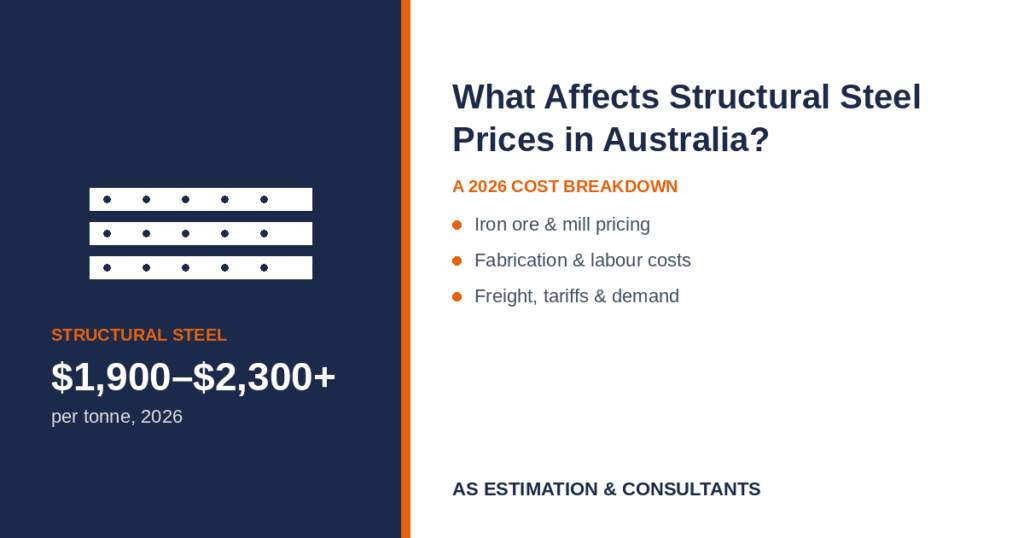
In 2026, structural steel prices in Australia are expected to remain relatively stable, with moderate increases compared to previous years rather than major price spikes. Current market estimates place structural steel costs in the range of approximately $1,900 to $2,300 per tonne, depending on steel type, supplier, fabrication requirements, project location, and market conditions.
Understanding these cost drivers is essential for builders, developers, fabricators, quantity surveyors, and construction estimators preparing accurate project budgets and tenders. At AS Estimation & Consultants, we help contractors and construction professionals analyse material costs, prepare accurate quantity takeoffs, and develop reliable construction estimates based on current market conditions.
By identifying the factors influencing steel pricing, professionals can better manage risks, plan procurement strategies, and avoid unexpected cost increases during construction. This guide explains the major factors affecting structural steel prices in Australia in 2026 and how they influence overall construction costs.
Current Structural Steel Price Per Tonne in Australia (2026)
The cost of structural steel in Australia varies depending on several project-specific factors, including steel grade, fabrication complexity, supplier pricing, transportation requirements, and market conditions.
As a general guide, structural steel prices in 2026 may fall within the following range:
| Pricing Scenario | Estimated Cost Per Tonne |
| Low Range | $1,900 per tonne |
| Average Range | $2,100 per tonne |
| High Range | $2,300+ per tonne |
These figures represent indicative market ranges and may vary depending on project requirements, location, supplier availability, and whether the steel is locally manufactured or imported.
For a detailed breakdown of current steel rates, specifications, and cost considerations, read our Structural Steel Cost Per Tonne Australia guide.
While the price per tonne provides a useful starting point, it does not explain why steel costs change. Several underlying factors influence the final price contractors receive from suppliers and fabricators.
What Affects Structural Steel Prices in Australia?
Structural steel pricing is influenced by a combination of global commodity markets, local manufacturing conditions, construction demand, and project-specific requirements. The following factors have the biggest impact on steel costs in Australia.
Raw Material Costs
Raw materials are one of the most significant factors affecting structural steel prices. Steel production depends heavily on commodities such as iron ore, metallurgical coal, and scrap steel, meaning fluctuations in these markets directly influence manufacturing costs.
Iron Ore Price Movements
Iron ore is the primary raw material used in steel production. Changes in global iron ore supply and demand can influence the cost of producing steel products.
Factors affecting iron ore prices include:
- Global construction activity
- Steel production levels in major markets
- Mining output
- International trade conditions
- Currency fluctuations
When iron ore prices rise, steel manufacturers often incur higher production costs, which can eventually affect structural steel pricing in construction projects.
Scrap Steel Costs
Scrap steel is another important input, especially for electric arc furnace (EAF) steel production. Recycling steel reduces dependence on raw materials but introduces another cost factor because scrap prices fluctuate based on supply, demand, and recycling activity.
Higher scrap steel prices can increase manufacturing costs, while greater availability of recycled steel may help stabilise pricing.
Steel Manufacturing Costs
After raw materials, the manufacturing process itself plays a major role in determining structural steel prices in Australia. Producing structural steel requires significant energy, specialised equipment, skilled operators, and ongoing maintenance, all of which contribute to the final cost.
Energy Costs
Steel manufacturing is an energy-intensive process. Steel mills require large amounts of electricity and fuel to operate furnaces, rolling mills, and processing equipment.
Changes in energy prices can directly affect steel production costs due to:
- Electricity price fluctuations
- Natural gas costs
- Manufacturing efficiency
- Government energy policies
- Global energy market conditions
When energy costs rise, manufacturers may increase steel prices to maintain production margins. This impact can flow through the supply chain and affect construction budgets.
Whyalla Steelworks and Local Supply Conditions
Australia’s domestic steel supply is also influenced by the performance of major steel manufacturing facilities. The situation surrounding Whyalla Steelworks highlights how local production challenges, operational changes, and supply uncertainty can influence market confidence.
Any disruption to domestic steel manufacturing capacity can affect:
- Steel availability
- Lead times
- Supplier competition
- Dependence on imported products
For contractors and developers, monitoring local supply conditions is important when planning projects that require significant quantities of structural steel.
Fabrication and Labour Costs
The price of structural steel is not only determined by the cost of raw steel products. Fabrication requirements can significantly influence the final project cost, especially for complex commercial, industrial, and infrastructure projects.
Structural steel fabrication involves multiple processes, including:
- Cutting and shaping steel members
- Welding and assembly
- Drilling and connection preparation
- Surface preparation and coating
- Quality inspections
- Shop drawings and detailing
Projects with complex designs, custom steel sections, or specialised finishes generally require more fabrication time and higher labour input.
Skilled Labour Availability
Labour costs are another important factor affecting structural steel pricing in Australia. The industry relies on skilled professionals, including:
- Structural steel fabricators
- Welders
- Boilermakers
- Steel detailers
- Workshop technicians
A shortage of skilled workers can increase workshop rates and extend fabrication timelines. Higher wages, training requirements, and workforce availability all contribute to increased fabrication costs.
For contractors preparing tenders, understanding fabrication requirements early can help create more accurate budgets and reduce unexpected cost increases.
Freight and Logistics Costs
Transportation is another major factor influencing structural steel prices, particularly because steel products are heavy, oversized, and often require specialised delivery arrangements.
The final cost of steel delivered to a project site depends on factors such as:
- Distance from supplier or fabricator
- Fuel prices
- Transport availability
- Project location
- Delivery scheduling requirements
- Crane and unloading requirements
Metro vs Regional Project Costs
Structural steel projects located in major cities such as Sydney, Melbourne, Brisbane, and Perth may benefit from greater supplier availability and shorter delivery distances.
However, regional and remote projects may experience higher costs due to:
- Longer transportation distances
- Limited supplier options
- Additional handling requirements
- Increased delivery times
For large-scale projects, freight planning should be considered during the estimating stage to avoid underestimating total steel costs.
Global Trade and Policy Factors
Although Australia has domestic steel production capabilities, global markets still influence structural steel pricing. International supply conditions, trade policies, and import activity can affect both availability and cost.
Chinese Steel Export Policies
China is one of the world’s largest steel producers, meaning changes in Chinese production levels and export policies can influence global steel markets.
Factors that may affect pricing include:
- Changes in export volumes
- International demand
- Government policies
- Production restrictions
- Global supply chain conditions
When international steel supply changes, Australian suppliers may experience pricing pressure due to increased competition or reduced availability.
Tariffs and Protection Measures
Government trade policies can also affect imported steel prices. Tariffs, anti-dumping measures, and import regulations may influence the cost difference between locally produced and imported steel.
Contractors should consider these factors when comparing supplier quotes and selecting procurement strategies.
Market Demand and Construction Activity
Construction demand plays a significant role in determining structural steel prices. When demand increases, suppliers and fabricators may experience higher workloads, which can influence pricing and availability.
Demand is commonly affected by:
- Commercial construction activity
- Industrial developments
- Warehouse projects
- Infrastructure investment
- Residential construction trends
Commercial and Industrial Demand Cycles
Large commercial and industrial projects often require significant quantities of structural steel. Increased demand from sectors such as:
- Manufacturing facilities
- Data centres
- Warehouses
- Logistics buildings
- Infrastructure projects
can place additional pressure on steel supply chains.
During periods of lower construction activity, suppliers may offer more competitive pricing due to reduced demand.
Understanding market cycles helps builders and developers determine the right timing for procurement and budgeting decisions.
How These Factors Combine to Set Your Final Structural Steel Cost Per Tonne
Structural steel pricing is the result of multiple interconnected factors rather than a single market price. Raw material costs establish the foundation, while manufacturing expenses, fabrication requirements, labour rates, freight charges, and market demand determine the final amount contractors pay.
For example, two projects requiring the same quantity of steel may have different costs depending on:
- Steel grade and specifications
- Fabrication complexity
- Project location
- Delivery requirements
- Supplier availability
- Current market conditions
A commercial warehouse project located near a major steel supplier may have lower delivery and fabrication costs compared to a remote industrial project requiring long-distance transportation and specialised installation planning.
This is why using a simple price-per-tonne figure alone may not provide an accurate project budget. Professional construction estimating considers all cost variables to create a realistic forecast before procurement begins.
Accurate early-stage estimating helps builders and developers identify potential price risks, compare supplier quotes, and make informed decisions before construction contracts are finalised.
What This Means for Your Project Budget
Fluctuating structural steel prices can have a significant impact on overall construction budgets, especially for projects with large steel requirements such as warehouses, commercial buildings, industrial facilities, and infrastructure developments.
Instead of relying on a fixed steel price, contractors should prepare budgets using realistic cost ranges and consider possible market changes during the project timeline.
Budget Planning Tips for Structural Steel Projects
Allow for Price Changes
Steel prices can change between the estimating stage, tender submission, procurement, and construction. Including realistic escalation allowances can help reduce the risk of unexpected cost increases.
Purchase at the Right Time
Early procurement and supplier discussions can help secure pricing before market conditions change. For large projects, locking in supplier agreements early may provide better cost control.
Use Accurate Quantity Takeoffs
Incorrect steel quantities can lead to significant budget issues. Detailed quantity takeoffs help identify the exact amount of steel required, reducing material waste and improving cost accuracy.
Compare Multiple Supplier Options
Obtaining quotes from different suppliers and fabricators allows contractors to evaluate pricing, lead times, and service quality before making purchasing decisions.
Why Professional Estimating Matters for Structural Steel Projects
Accurate estimating plays a critical role in controlling construction costs, especially when material prices are influenced by changing market conditions. Professional estimators analyse project drawings, specifications, material requirements, labour costs, fabrication requirements, and market pricing to develop reliable construction budgets.
For structural steel projects, professional estimating services help contractors understand:
- Required steel quantities
- Material specifications
- Fabrication requirements
- Labour allowances
- Equipment costs
- Installation considerations
- Potential cost risks
At AS Estimation, our team provides detailed construction cost estimating services, quantity takeoffs, and industrial estimating solutions to help builders, contractors, and developers prepare accurate tenders and project budgets.
Whether you are planning a commercial building, industrial facility, warehouse, or large-scale construction project, accurate steel cost estimation can improve decision-making and reduce financial risks.
Need Accurate Structural Steel Cost Estimates?
Planning a commercial, industrial, or residential construction project? AS Estimation provides professional construction estimating services, structural steel estimating, and detailed quantity takeoff solutions to help contractors prepare accurate budgets and competitive tenders.
Contact our estimating team today to receive reliable cost estimates tailored to your project requirements.
Conclusion
Structural steel prices in Australia are influenced by a combination of global and local factors, including raw material costs, manufacturing expenses, fabrication requirements, labour availability, freight conditions, trade policies, and construction demand.
For builders, developers, and contractors, understanding these factors is essential for creating realistic budgets and reducing financial risks. While market conditions can change, accurate quantity takeoffs and professional cost estimating provide the foundation for better project planning and decision-making.
Frequently Asked Questions
What is the average price of structural steel per tonne in Australia in 2026?
The average structural steel price in Australia in 2026 may range between approximately $1,900 and $2,300 per tonne, depending on steel type, supplier, fabrication requirements, location, and current market conditions.
Why do structural steel prices fluctuate so much?
Structural steel prices change due to fluctuations in raw material costs, energy prices, labour availability, freight expenses, global supply conditions, and construction demand. Changes in any of these areas can influence supplier pricing.
Is structural steel expected to become more expensive in 2026–27?
Structural steel prices may experience moderate changes depending on global commodity markets, energy costs, construction activity, and supply chain conditions. Contractors should monitor market trends and include appropriate cost allowances in project budgets.
How does the iron ore price affect structural steel costs?
Iron ore is a primary raw material used in steel production. When iron ore prices increase, steel manufacturers may face higher production costs, which can influence the final price of structural steel products.
Should contractors lock in steel pricing early for large projects?
For large construction projects, securing supplier quotes early can help reduce exposure to future price changes. Early procurement planning allows contractors to manage budgets more effectively and avoid unexpected increases.
How can I estimate structural steel costs accurately?
Accurate structural steel estimation requires detailed analysis of project drawings, material quantities, specifications, fabrication requirements, labour costs, and current market pricing. Professional estimating services can help contractors prepare reliable project budgets and tender submissions.