Most homeowners start with a rough budget because it feels like progress. You get a number, you start sketching ideas, and the project suddenly feels real. The problem is that a rough budget is not built to protect you. It’s a broad guess based on limited inputs, so it can’t show what’s missing, what’s assumed, or where the risk sits.
A residential cost plan is different. It’s still an early estimate, but it’s tied to scope, allowances, and clear assumptions, so you can make decisions with your eyes open. In this guide, you’ll see the real difference between a cost plan and a rough budget, why rough budgets fail, and what you actually need before you commit to design, quotes, or contracts.

The Real Problem: You’re Making “Fixed” Decisions With A Non-Fixed Number
A rough budget can feel like a green light, but it’s usually just a moving target. You start making fixed decisions—design, size, finishes, even finance—based on a number that hasn’t counted the real scope and risks yet. Real cost estimating certainty comes from early estimating that documents assumptions before construction starts.
- Feels “safe,” but it isn’t — Rough budget limitations hide what’s missing, so the number looks firm when it’s not.
- Fixed choices lock in costs — Once you choose layout, spec, and features, homeowner decision-making becomes expensive to undo.
- Scope gaps create surprises — This is why rough budgets fail in construction: key items get skipped or guessed too early.
- Risk doesn’t show up for free — Siteworks, approvals, and unknowns drive pre-build budget risk if they aren’t priced properly.
- Assumptions are the real budget — Cost certainty before construction starts comes from writing down what’s included, excluded, and allowed for.
- Budget blowout starts early — Early estimating is your chance to spot pressure points before they become contract-time shocks.
Definitions of Rough Budget and Residential Cost Plan (non-negotiable clarity)
Clear definitions are non-negotiable because most budget blowouts start with a wording problem. A “rough budget” sounds like a plan, so people treat it like one. In this blog, we separate a rough budget vs detailed estimate so you know what each number can (and can’t) do before you commit.
A good rule: if the number is meant to guide real decisions, it must be tied to scope, assumptions, and risk. That’s the difference between early-stage construction budgets and a cost plan you can actually use to control design and spending.
Rough Budget (What It Is)
A rough budget is a range-based number built from early-stage estimating. It’s usually rate-based, like a sqm rate estimate, and it depends on broad assumptions about size, spec, and location. Because it has limited scope detail, it’s best used for a feasibility assessment—basically, “Is this project even in the right ballpark?” It helps you compare options early, but it is not a promise. If the scope changes, or hidden items show up, the preliminary budget moves with it. That’s why a rough budget is useful for early decisions, but risky for fixed commitments.
Residential Cost Plan (What It Is)
A residential cost estimating plan is a scope-led estimate that aims for cost certainty by spelling out what’s included, what’s excluded, and what’s assumed. It’s built through a professional estimating process and supports construction cost transparency, because you can see where the money is going. A cost estimate plan includes allowances, contingency, and an assumptions list so risks are not ignored—they’re priced and documented. You’ll often see it as a design-stage estimate or element cost plan, breaking costs into parts like structure, finishes, and services. In short, a residential cost plan explained in plain terms is: “a detailed estimate you can use to make smart design choices during pre-construction cost planning.”
What Goes In, How It’s Calculated, and What You Can Trust
If you’ve ever wondered why two people can give two very different “budgets” for the same house, this is the reason. Any number is only as useful as (1) what you give them, (2) how they build it, and (3) what decisions it’s safe to make from it. This is the clean way to think about cost planning before building a house, without getting trapped by a comforting guess.
Feasibility cost planning for homeowners is meant to reduce pre-build budget risk, not hide it. When you separate inputs, method, and outputs, you stop treating a rough budget like a fixed promise and start asking better questions early—before the design, spec, and finance decisions get locked in.
Inputs: What You Must Provide Before Anyone Can Price It Properly
Rough Budget Inputs: Size, Spec Level, and Location
A rough budget is built from light inputs. You might share a target size, a basic spec level, and where you want to build. That’s enough for early-stage estimating, but it comes with rough budget limitations because there’s no detailed scope definition behind the number. Change the floor plan, increase glazing, add wet areas, pick higher finishes, or face a tricky site, and the budget can move fast. It’s fine for a feasibility assessment, but it’s not solid enough to base fixed decisions on.
Cost Plan Inputs: Concept Drawings, Inclusions List, Site Notes, and Allowances Choices
A residential cost plan needs stronger inputs because it aims for cost certainty before construction starts. At minimum, you want concept drawings, an inclusions list that spells out what’s in and what’s out, and a clear scope definition so the estimate has boundaries. Site notes matter too—slope, access, services, drainage, and anything you already know about soil. Then come allowances choices for kitchens, bathrooms, flooring, appliances, and fixtures. This is proper pre-construction planning: it turns “maybe” into “measurable.”
Method: How The Number Is Built (and Why One Is Stronger)
Rough Budget Method: Broad Rate Assumptions (SQM Rate Estimate)
Most rough budgets come from broad rate assumptions. Someone applies an SQM rate estimate, maybe adjusts for a general finish level, and gives you a range. That estimating method can be quick and useful early, but it doesn’t measure the design properly and it rarely prices risk items in a visible way. This is why rough budget vs detailed estimate isn’t just a difference in detail—it’s a difference in how the number is produced. When the method is broad, the output stays broad.
Cost Plan Method: Takeoff + Build-Up Estimate + Risk Allowances
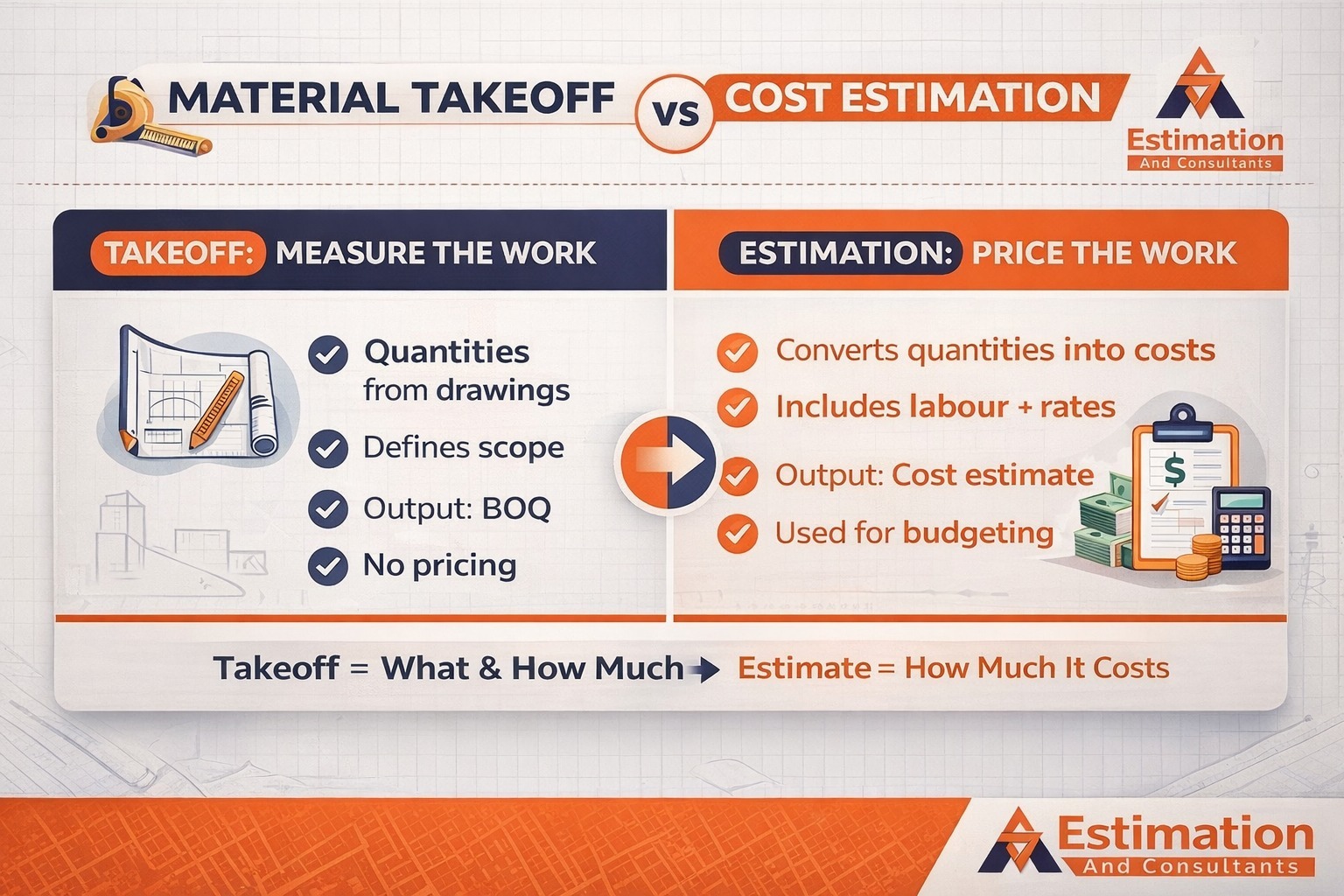
A cost plan is built through a professional estimating process. The estimator measures the design, completes a takeoff, and then creates a build-up estimate using a material and labour breakdown. Instead of guessing, they build the total from components and quantities, then add risk allowances where information is still developing. Most importantly, they document the assumptions and exclusions so you can see what the number depends on. That construction cost transparency is the whole point. It’s also the clearest way of comparing rough estimates to professional cost plans—one is a rate-based range, the other is a measured plan with risk shown on the page.
Outputs: What Decisions You Can Safely Make With Each Number
Rough Budget Output: “Should We Explore This?”
A rough budget is best used for a simple decision: should we explore this idea? It can help you choose between two project directions, test if the size is realistic, or decide whether to spend more on design. It’s a useful early filter, but it won’t protect homeowner decision-making once things become fixed—like finance approvals, signed quotes, or committed design choices. Treat it as a starting range, not a promise, and you’ll avoid the classic budget blowout story.
Cost Plan Output: “Can We Commit, and What Do We Change?” (Design-to-Budget Cost Control)
A cost plan is built for commitment and control. It answers: can we afford this as designed, and if not, what do we change? Because the cost plan shows where money is going, it supports design-stage cost control—adjusting scope, specs, and allowances before you get locked into tender or contract. That’s how you get cost certainty before construction starts, not by hoping the rough budget holds. In practice, a good cost plan becomes your residential construction budgeting guide: it helps you make calm decisions early, reduce pre-build budget risk, and keep the project aligned with your real limits.
| What You’re Comparing | Rough Budget | Residential Cost Plan |
| What It’s For | “Should we explore this?” | “Can we commit, and what do we change?” |
| What You Need To Provide | Size + spec level + location | Concept drawings + inclusions list + site info + allowances |
| How It’s Built | Broad sqm rate assumptions | Takeoff + build-up estimate + risk allowances |
| What It Misses Most Often | Scope gaps, siteworks, compliance, soft allowances | Makes gaps visible with assumptions, exclusions, contingency |
| Risk Of Budget Blowout | High once selections/quotes arrive | Lower because risks are shown early |
Why Rough Budgets Fail
Rough budgets fail because they look precise when they’re still missing key information. They’re built early, with limited detail, so they can’t reliably capture what’s included, what’s excluded, and where the risks sit. That’s one of the biggest budgeting mistakes homeowners make—treating a moving number like a fixed promise.
Most budget blowouts don’t come from one big surprise. They come from several small gaps that stack up: scope creep, soft allowances, and “invisible” site and compliance costs that only show up once the job gets serious.
Scope Gaps: What Isn’t Defined Will Cost You Later
A rough budget often skips a detailed scope definition, so inclusions/exclusions stay fuzzy. That’s where scope creep begins. Provisional items get left vague, trades get overlooked, and external works (driveways, fencing, landscaping, drainage) get “assumed” instead of confirmed. Without construction cost transparency, you don’t know what the number actually covers. By the time the project reaches quoting or tender, these gaps turn into variations, upgraded allowances, or extra line items that push the total beyond what you thought you approved.
Allowances And Provisional Sums: Risk Hidden As A “Number”
Allowances and provisional sums (PC sums, provisional sums) can be reasonable, but they can also hide allowance risk. If the allowance is too low, you feel “on budget” until you start selecting real products. If it’s too broad, it becomes a blank cheque. This is why comparing rough estimates to professional cost plans matters: a cost plan shows allowances and contingencies in cost plans clearly, and it uses contingency planning to cover real uncertainty. Rough budgets often use allowances as a shortcut, which shifts the risk from the estimator to the homeowner.
Where allowance problems usually show up first:
- Kitchens And Joinery — the range is wide, and choices change fast
- Bathrooms And Tiling — fixtures, waterproofing, and labour add up
- Flooring And Lighting — “basic” vs “mid-range” can double quickly
Site, Compliance, And Prelims: The Costs You Don’t Picture
This is the “not in your Instagram post” part of a build: siteworks, access constraints, temporary works, permits, inspections, and builder preliminaries. These site costs and compliance costs don’t look exciting, so they get missed early. But they’re real, and they’re common. Risk identification early is what prevents a budget blowout later. Add overhead and margin on top, and the gap widens again. A rough budget that ignores these items is not wrong on purpose—it’s just incomplete, and incomplete numbers don’t protect you.
What You Really Need Before You Start: A Cost Certainty Checklist
If you want real cost certainty, you need more than a rough budget and good intentions. You need a small set of inputs that define the job, and a cost plan that shows its workings. This is what pre-construction cost planning looks like in real life: clear scope, clear allowances, and clear rules before you commit.
Early-stage construction budgets are fine for “should we explore,” but they’re not strong enough for sign-offs. The goal here is simple: reduce surprises by putting the right detail on paper while changes are still cheap.
Minimum Documents To Request A Cost Plan
You don’t need a full set of drawings to get started, but you do need enough detail to avoid guessing. A good pre-design checklist gives the estimator the cost plan inputs they need for pre-construction planning and a detailed scope definition. Without this, you’ll get wide ranges, vague exclusions, and a number that drifts as soon as you make selections.
Minimum Cost Plan Inputs (Keep It Simple):
- Concept Plan — basic layout and overall size
- Room Areas — even a rough schedule helps accuracy
- Inclusions List — what you expect (and what you don’t)
- Site Info — access, slope, services, and any known constraints
- Target Budget Range — your ceiling and what you’re trying to achieve
What A “Good” Residential Cost Plan Must Include
A residential cost plan explained properly is not just a total price. It’s a document that makes construction cost transparency possible by showing how the number was built and where the risk sits. If these sections are missing, you’re back to a rough estimate with nicer formatting. A good plan gives a detailed cost breakdown for homes and also shows how contingency planning is handled, including the reason behind the contingency allowance.
Non-Negotiables Inside The Cost Plan:
- Element Breakdown — structure, envelope, services, finishes (an element estimate you can test)
- Allowances Schedule — what’s allowed for each key selection item
- Assumptions And Exclusions — a clear assumptions list so you know the boundaries
- Contingency And Why — the contingency allowance amount and what risks it covers
Your Decision Rule If You’re Over Budget (So You Don’t Panic Later)
Most people panic when the cost plan comes back high because they have no plan for what changes first. Set that rule early, while the design is still flexible. This is design-stage cost control in plain terms: you decide what matters most, then you protect those items and adjust the rest. It also makes homeowner decision-making much easier, because you’re choosing calmly, not reacting under pressure.
A simple approach is priority tiers: must-have, nice-to-have, and can-live-without. Then build a value engineering plan that reduces cost without damaging the core goals. This is the practical side of cost planning before building a house—design-to-budget isn’t a slogan, it’s a decision method.
The Practical Workflow: Cost Plan Stage Gates Before Construction
A cost plan works best when it’s not treated as a one-time document. It should act like a set of stage gates—small checkpoints that stop you from drifting into expensive design decisions without a matching budget. This is how you turn pre-construction cost planning into a control system, not a guess.
Each gate has one job: reduce uncertainty before you spend more time or money. You start with a feasibility estimate, tighten the design through regular cost checks, and finish with a contract-ready budget that protects you at tender.
Gate 1 — Feasibility: Before Detailed Design
This is feasibility cost planning for homeowners done properly. You use early-stage estimating to confirm the size and spec level are realistic, test site risk, and set a hard maximum budget before the design runs away. The goal is early budget validation, not a perfect number. If the feasibility assessment shows the project is over budget, you adjust early—smaller floor area, simpler form, fewer wet areas, or a different finish level—when changes are still cheap and fast.
Gate 2 — Design-To-Budget: As Drawings Develop
This is where most projects either stay healthy or quietly slide into trouble. As concept and schematic drawings develop, you update the cost plan and do a simple cost check after any major change. This is design-stage cost control, and it’s part of a professional estimating process, not a nice-to-have. When you track changes, you can see what moved the budget—layout tweaks, extra glazing, upgraded finishes—so you can correct course early instead of “finding out later” at tender. Think of this as a design development estimate that keeps the drawings honest.
Gate 3 — Pre-Tender / Pre-Contract: Commit-Ready
This gate is about reducing surprises at tender and avoiding budget blowout prevention becoming a last-minute scramble. You lock the inclusions list, firm up allowances, and make contingency logic clear—what it covers and what it doesn’t. The goal is cost certainty before construction starts, as close as you can reasonably get. A pre-tender estimate should feel like a contract-ready budget: fewer unknowns, fewer vague provisional sums, and fewer chances for the price to jump the moment real quotes arrive.
Mini Case Study: A Real Example Of Rough Budget vs Cost Plan Outcomes
A homeowner starts with a rough budget and feels confident enough to move into design. The number looks clean, but it doesn’t show the difference between cost plan and rough budget. Key risks sit outside the estimate, so the project feels “on track” right up until real quotes and real selections force the truth.
Scenario Setup: Same Brief, Two Different Ways To Budget
Both paths start with the same goal: a comfortable family home with a clear budget ceiling. The difference is the process. One path relies on a ballpark number and keeps moving. The other uses early risk identification and a cost plan to test the design before decisions become expensive to change.
Path 1: Rough Budget Misses Siteworks And Allowances
The rough budget is built fast and doesn’t drill into siteworks or realistic allowances. Site conditions and access needs are assumed to be “standard,” and the kitchen and bathroom allowances are set low to keep the headline number friendly. As design progresses, selections drift higher than the allowances. Once quotes come back, the gap becomes obvious and the project hits a budget blowout story: the homeowner must either pay more or cut features under pressure.
Path 2: Cost Plan Flags Risks Early And Guides Redesign Choices
With a cost plan, the estimator calls out siteworks as a risk early and sets allowances that match the intended finish level. The plan shows assumptions and exclusions clearly, so nothing is hidden. That supports budget blowout prevention because the homeowner can make calm design changes while it’s still cheap: simplify roof lines, reduce structural complexity, trim joinery scope, or adjust glazing. The result is not a “cheap” home—it’s a home that fits the budget with fewer surprises.
The Takeaway: The Outcome Depends On What You Measure Early
A rough budget can help you decide whether to explore a build, but it won’t protect you from risk. A cost plan gives you visibility and control, so you can fix problems early—before they turn into a forced downgrade later.
FAQs
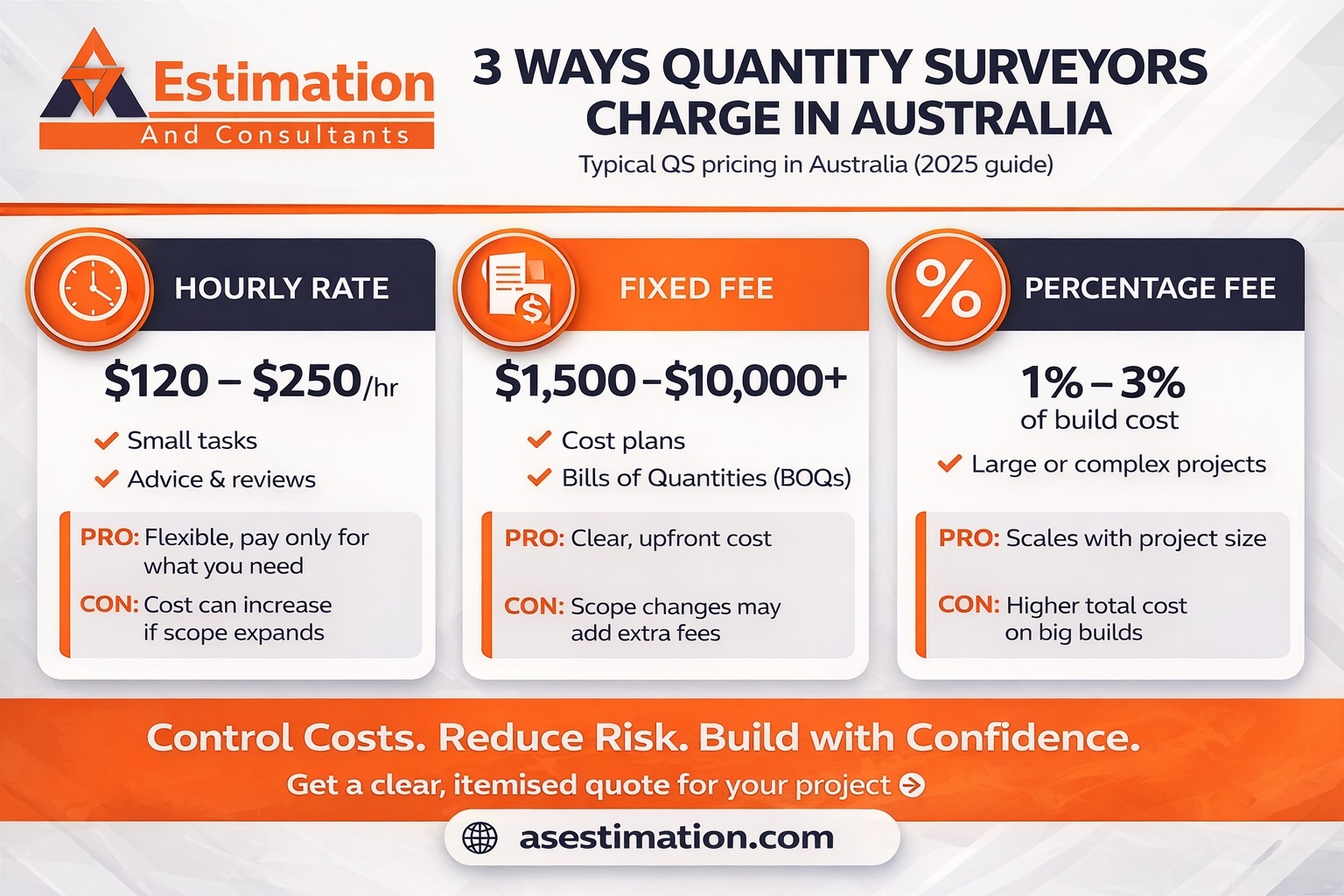
Cost plan cost depends on the size of the home, the stage of drawings, and how detailed you want the breakdown. A basic feasibility estimate is usually cheaper than a full residential cost plan with an element breakdown, allowances, and notes. If you’re close to your budget ceiling, the extra detail often saves money by preventing late changes and allowance surprises.
A rough budget is a range built from limited inputs, so accuracy is naturally limited. A cost plan is more accurate because it follows a professional estimating process, uses measured quantities (where possible), and documents assumptions. It won’t remove every unknown, but it improves cost certainty by showing what’s included, what’s excluded, and what risks are still live.
A rough budget isn’t enough when you’re about to make fixed decisions—like committing to a design, seeking finance approval, or choosing a builder. It also falls short on complex sites, custom builds, or higher-spec homes where allowances and provisional sums can swing the total. If you need confidence before signing anything, you need pre-construction cost planning, not a ballpark.
There’s no single perfect number, because contingency planning depends on how defined the scope is and how risky the site conditions are. Early on, contingency is usually higher because more is unknown. As the design is refined, inclusions are locked, and allowances are realistic, contingency can often reduce. The key is that contingency should be explained: what it covers, and why it’s there.
Allowances and provisional sums are placeholders for items not fully selected or not fully defined. They’re common for kitchens, bathrooms, and some siteworks. They’re not “free money,” and they’re not fixed. If your actual selections cost more than the allowance, you pay the difference. A good cost plan makes these visible so you can control allowance risk early.
Conclusion: If You Need To Commit, Get A Cost Plan
A rough budget can help you decide whether a build is worth exploring, but it won’t protect you once decisions become fixed. If you want cost certainty, you need pre-construction planning that turns assumptions into clear inclusions, realistic allowances, and visible risk. That’s the value of a residential cost plan explained properly: it gives you control while changes are still easy.
If you’re ready to start cost planning, don’t wait until quotes arrive and the budget is already under pressure. Request a cost plan early, using your concept drawings, inclusions list, and site notes—so you can commit with confidence, not hope.