Plumbing costs in Australia in 2025–2026 can feel confusing because two quotes for the “same job” often come back miles apart. This guide gives you the numbers people look for first, then explains what actually moves the price—labour, materials, access, and compliance—so you can budget with less guesswork.
You’ll also get a simple way to estimate your own job in minutes and compare quotes properly. The aim is better quote transparency, stronger plumbing estimating service accuracy, and a plumbing cost guide that Australian homeowners and builders can actually use.
Plumbing cost ranges in Australia (2025–2026) — the numbers people look for
Most people want the ballpark first. In 2025–2026, average plumbing rates in Australia sit around $80–$200 per hour, plus a call-out fee. After-hours jobs cost more because you’re paying for availability. Your suburb, access, and urgency shift the final number. For small fixes, expect a minimum charge even if it’s quick.
- Hourly rate (standard hours) — $80–$200/hr is a common Australia-wide range for the cost of plumbing per hour.
- Standard call-out fee — often $60–$250 on top of labour (some include the first hour—ask).
- After-hours/urgent call-out — commonly $150–$300+, depending on time and location.
- After-hours hourly rate — can jump to roughly $100–$250/hr (sometimes more) for emergency plumbing costs in Australia.
- Small job minimums — simple fixes can still land around $80–$150 before extras, even when the work is short.
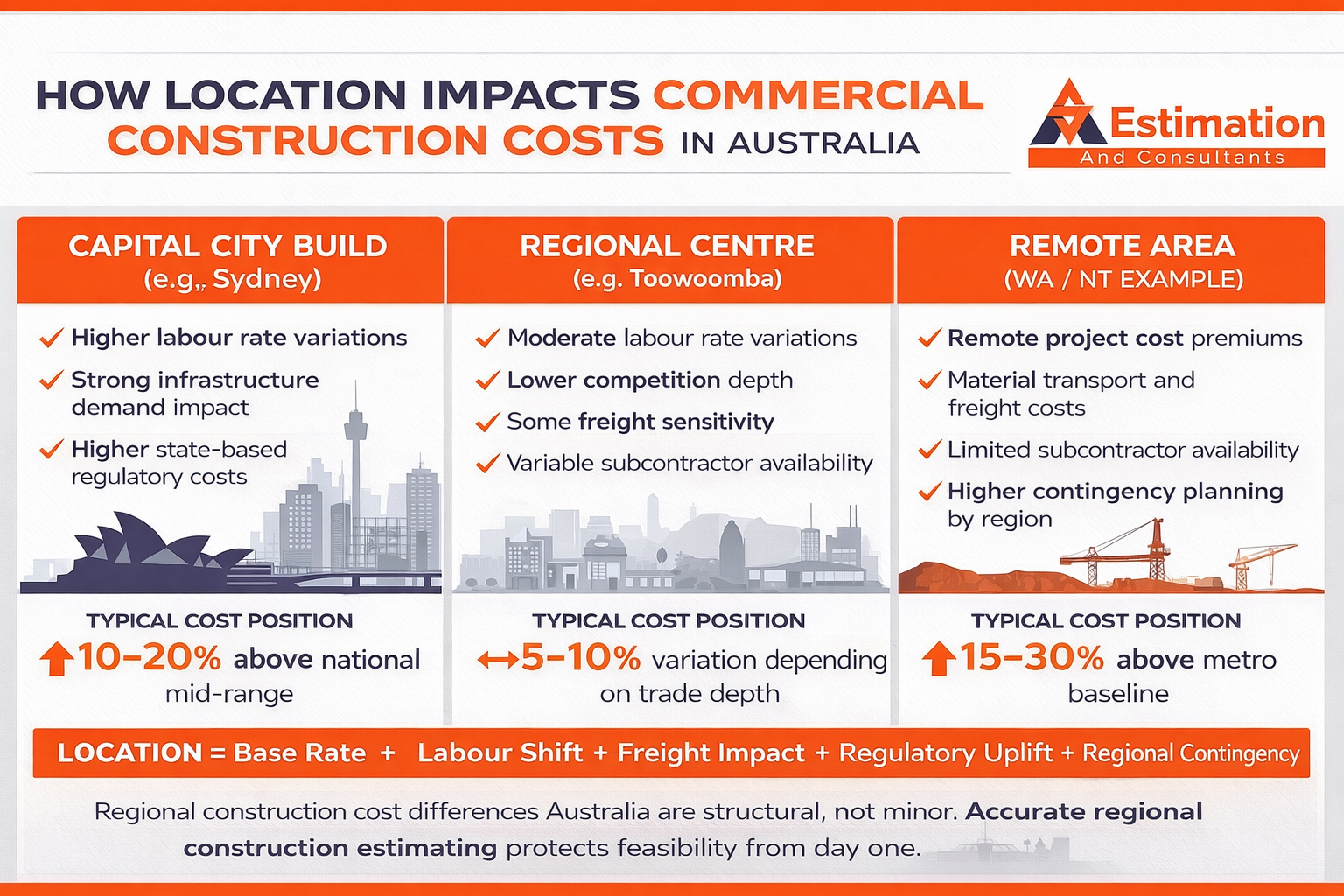
- Why ranges vary — emergency vs scheduled plumbing work, plus regional cost variations (metro demand, travel time, access) explain most gaps.
What changes the price (MECE) — 5 drivers that explain almost every quote
Most plumbing quotes shift for the same five reasons. If two jobs look similar but price differently, it’s usually access, layout, fixtures, materials, compliance, and unknowns. These plumbing pricing factors in Australia affect time on site and the plumbing labour vs material cost split.
- Access & site conditions — Tight spaces, slab work, and digging add time fast. What to check: roof space, underfloor access, trenching needs, parking/loading.
- Complexity & layout — Longer runs, extra bends, and multi-storey routing increase labour. What to check: distance to mains, number of wet areas, routing obstacles.
- Fixture count & quality — More fixtures and higher-end fittings mean more connections and careful fit-off. What to check: full fixture list, brand/grade, mixers vs taps, special wastes.
- Materials choice (PVC, copper, PEX) — Pipe type changes supply cost and installation speed. What to check: specified pipe material, insulation needs, valves, and fittings quality.
- Compliance, testing & inspection fees — Certificates, pressure tests, and inspections add real cost. What to check: plumbing compliance and certification costs, test requirements, and documentation.
- Unknowns and risk — Hidden leaks, old pipework, or damaged drains can blow a budget. What to check: condition of existing lines, access for investigation, and realistic contingency.
Plumbing quote breakdown (MECE) — how a proper estimate is built
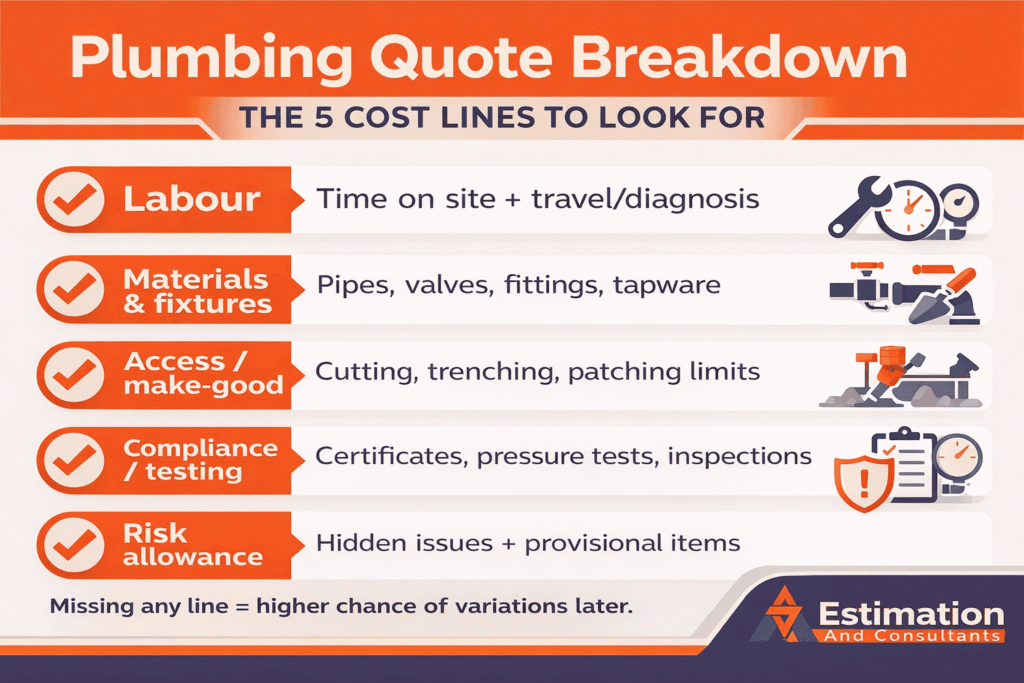
A proper quote is not a mystery. A good plumber (or estimator) can show the cost in four clear lines. When you can see the labour vs material split and what’s included, you get quote transparency and fewer surprises later. This plumbing quote breakdown is what an itemised plumbing quote should look like.
- Labour — Time on site, travel, diagnosis, and install time. This is where most variation happens.
- Materials & fixtures — Pipes, fittings, valves, tapware, toilets, basins, and consumables.
- Access, time, and make-good — Cutting openings, trenching, tight spaces, and what gets patched after the work.
- Compliance & inspection fees — Testing, certificates, and any required inspections or sign-offs.
- Risk allowances — Unknowns like hidden leaks, damaged drains, old pipework, and provisional items.
- Scope notes (must-have) — Inclusions and exclusions in plain words to support plumbing estimating accuracy and a clean plumbing estimate breakdown.
Costs By Project Type — Pick Your Bucket and Estimate Faster
Plumbing costs are easier to estimate when you first sort the job into the right bucket. Most people mix repair pricing with renovation pricing, then wonder why quotes don’t match. Use these four project types to keep things clean and MECE. Once you choose the right bucket, you can focus on the real cost drivers and ask better questions.
Repairs & maintenance
This is day-to-day plumbing maintenance and repairs: leaks, taps, toilets, small pipe fixes, and minor replacements. It’s commonly priced as a plumber call-out fee plus time on site and parts, which is why even “small jobs” still have minimum charges. The top cost drivers are access (how hard it is to reach), diagnosis time, and parts quality. When you ask for a quote, confirm the cost of plumbing per hour after the call-out, what parts are included, and whether a second visit is likely.
Drain problems
Drain work covers blocked sinks, toilets, stormwater, and sewer lines, plus inspection and clearing work. Costs jump quickly because access and severity change everything. A simple, clear line is different from a damaged line that needs repair or replacement. The top cost drivers are access to the line, the equipment needed (jetting, CCTV), and how much testing is required to confirm the blockage is gone. When you request a quote, ask if it’s priced as “clear only” or includes a repair option, and what water and drainage installation cost items might apply if replacement is needed.
Hot water work
Hot water jobs include installation, replacement, changeovers, and relocation. A clean estimate should separate unit supply from install labour, then list fittings like valves and connections, removal and disposal, and any changes to pipe runs. The top cost drivers are unit type and size, access to the unit location, and whether gas plumbing installation or compliance/testing is required. When you ask for a quote, confirm what’s included in the hot water installation cost Australia figure: supply, install, disposal, and any upgrades needed to make it compliant.
Renovations & new builds
This is where you see the biggest price spread because the scope is larger and mistakes are costly. The clean way to estimate is to split work into rough-in and fit-out plumbing, then build the rest around a fixture schedule. The top cost drivers are fixture count and quality, layout complexity (long runs, multi-storey), and access/site conditions (slab, trenching, tight spaces). When you ask for a quote, request a clear rough-in vs fit-off breakdown, confirm the plumbing cost per fixture assumptions, and make sure water, drainage, gas, and hot water are listed as separate scope lines so nothing is missed.
How to estimate plumbing costs in 10 minutes (simple method that works)
You don’t need a spreadsheet to get close. This 10-minute plumbing estimate method gives you a clean budget range before you call anyone. It also improves quote transparency because you’ll ask the right questions. Prices still move, but these steps cover the main plumbing cost factors 2025–2026.
- Pick your bucket — Repairs, drains, hot water, or renovation/new build.
- List fixtures and systems — Water, drainage, gas, and hot water items you need priced.
- Write down constraints — Slab, storeys, tight roof space, digging, and access limits.
- Ask the labour model — Hourly vs fixed price, plus call-out and after-hours rules.
- Confirm inclusions and exclusions — What’s covered, what’s extra, and what “make-good” means.
- Add a risk buffer — Allow for unknowns so your plumbing budgeting guide doesn’t blow out.
Quote comparison checklist (5 things to check before you pick “cheapest”)
Before you choose the “cheapest” plumber, make sure you’re comparing the same scope. Most budget blowouts come from missing items, vague allowances, or unclear make-good rules. This checklist keeps quote transparency high and protects your plumbing estimating accuracy. Use it to compare plumbing quotes in Australia without guessing.
- Scope match — Same rooms, same fixtures, same systems. If the scope differs, prices mean nothing.
- Fixture and material allowances — Check what’s included for tapware, toilets, pipes, and fittings. Low allowances inflate later.
- Access and make-good boundaries — Confirm cutting, trenching, patching, and who restores walls, tiles, or paving.
- Compliance and testing — Ask what inspections, pressure tests, and compliance and inspection fees are included.
- Variation rules — Get clear rates for extra work and what triggers a variation approval.
- Warranty and paperwork — Confirm warranty terms and any documents required for plumbing compliance and certification costs.
FAQs
In 2025–2026, average plumbing rates in Australia often fall around $80–$200 per hour in many areas. Metro locations, specialised work, and tight access can push rates higher. Always confirm whether travel time or the first block of time is included.
The cost of plumbing per hour is commonly quoted in the $80–$200/hr range for standard hours. The rate can change if the job needs diagnosis time, special tools, or work in hard-to-reach spaces. Ask what the minimum billed time is (for example, 30–60 minutes).
A typical plumber’s call-out fee in Australia is often $60–$250, depending on the suburb and job type. Some plumbers roll the call-out into the first hour; others charge it separately. Get that in writing so you can compare quotes properly.
An after-hours plumber’s cost usually starts with a higher call-out, often around $150–$300+, then labour on top. Night work, public holidays, and limited availability can lift that further. If it’s time-sensitive, ask for the full “arrive + first hour” price upfront.
Plumbing cost per fixture depends on whether it’s a like-for-like swap or new pipework is needed. As a rough guide, replacing a toilet can be $150–$400 labour, plus the toilet unit cost. If the set-out changes or drainage is altered, the price can jump quickly.
Conclusion
Plumbing costs in Australia in 2025–2026 are easiest to manage when you stop guessing and start estimating the right way. Get your project into the right bucket, list your fixtures and systems, note access limits, and check what the quote really includes. If you want a clear, independent numbers check before you commit, AS Estimation & Consultants can help you build a simple estimate and compare quotes on the same scope. When labour, materials, make-good, and compliance items are clear, you can compare quotes fairly and protect your budget from variations.