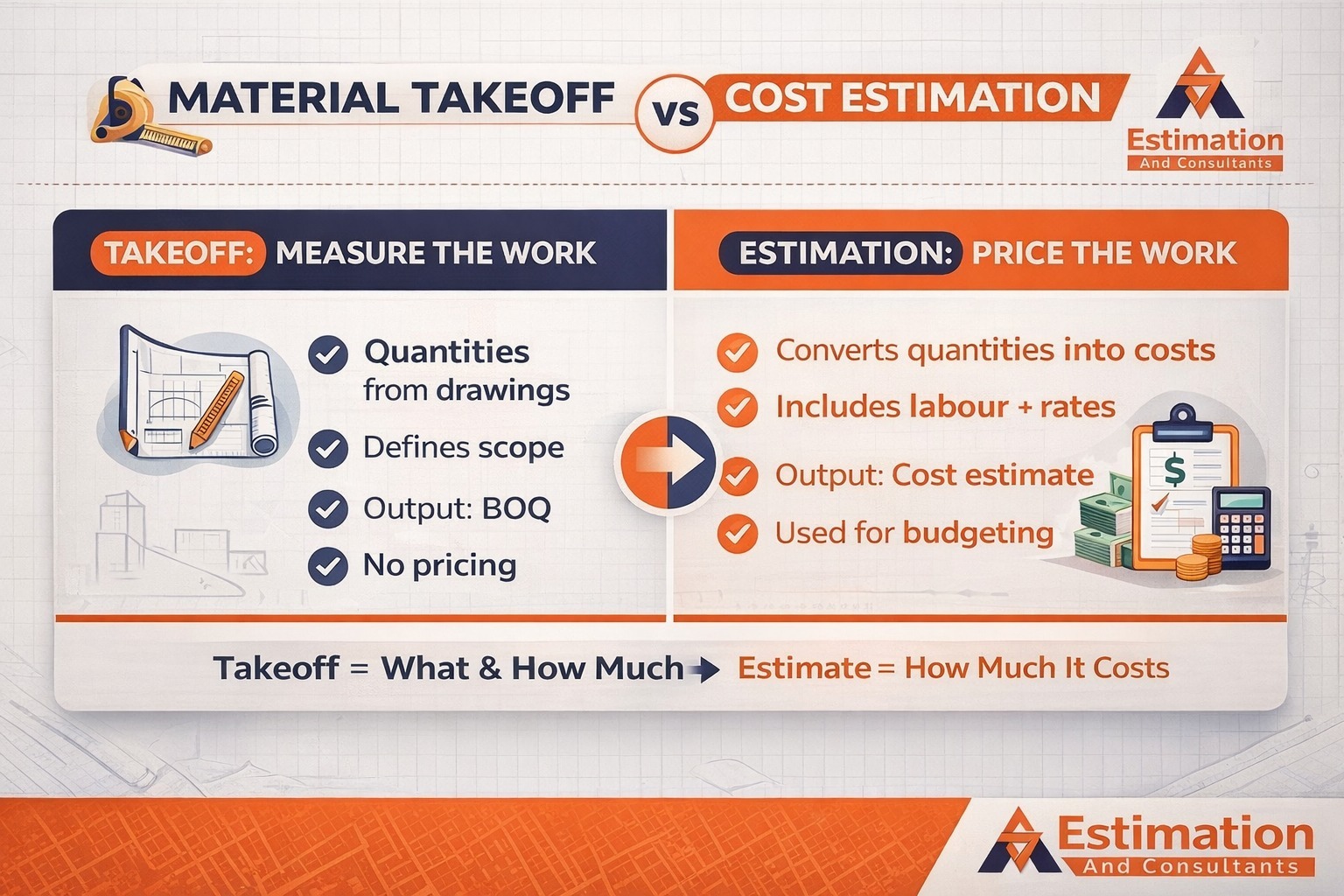
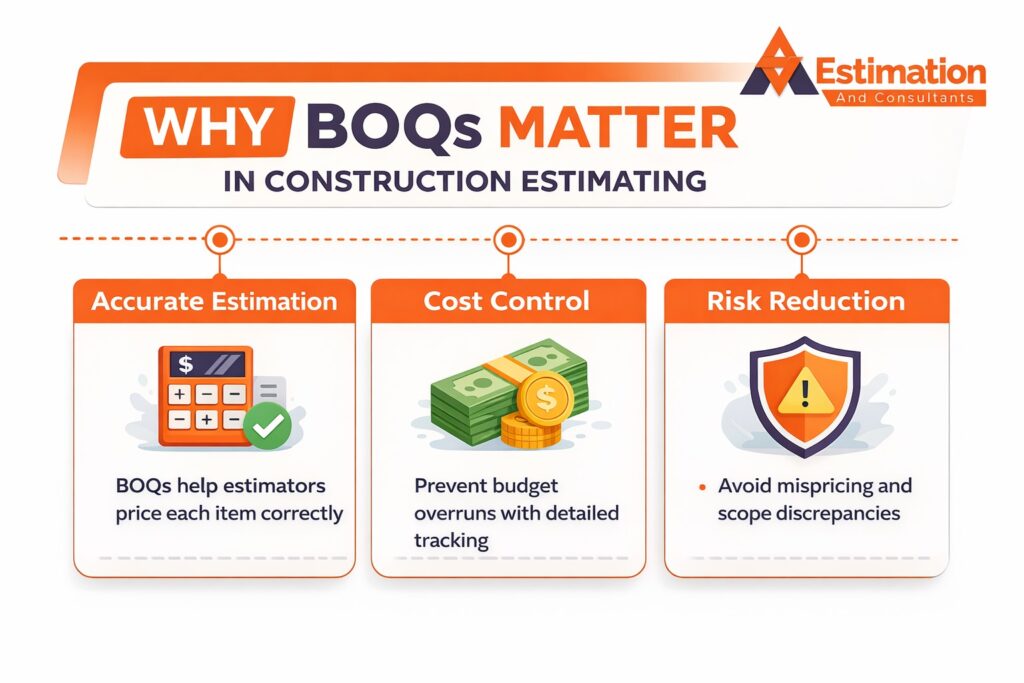
A Bill of Quantities (BOQ) is a crucial document in the construction estimating process. It lists every material, labor, and service required for a project, along with their quantities and costs. This detailed breakdown helps estimators create accurate cost estimates, ensuring that projects stay on budget and within scope.
Using a BOQ is essential for avoiding costly mistakes. Without it, estimators risk mispricing, underestimating, or missing critical resources, leading to budget overruns, delays, and disputes. A well-structured BOQ helps ensure accurate estimating, reducing risks, and making the entire project more efficient.
How Estimators Use BOQs in Their Workflow
Estimators rely on Bills of Quantities (BOQs) for key tasks in their workflow, ensuring accuracy and precision throughout the project. These tasks include:
- Pricing Each Item: Estimators apply unit rates for materials, labor, and overhead costs, forming the foundation for accurate cost estimates.
- Verifying Quantities: They cross-check quantities in the BOQ with the actual project scope, preventing costly discrepancies.
- Allocating Costs: BOQs help estimators assign proper pricing to every trade (e.g., plumbing, electrical), ensuring a clear breakdown for each task.
By performing these tasks, estimators ensure accuracy, minimize errors, and help prevent budget overruns, which are crucial for delivering projects on time and within budget. The BOQ serves as a key cost management tool throughout the project.
BOQ in Tender Pricing and Bid Comparison
Estimators use Bills of Quantities (BOQs) to price each item or unit during the tender pricing process. This structured approach allows for precise cost assignment to every part of the project, from materials to labor. It ensures that all aspects of the project are included, leading to more accurate estimates.
- Bid Comparison: With a BOQ breakdown, multiple bids can be compared easily, ensuring fairness and consistency across tenders. This comparison allows estimators to identify discrepancies in pricing, helping them select the most accurate and competitive bid.
- Why It Matters: BOQs help prevent underpricing and mispricing by giving estimators a detailed cost structure to follow, ensuring that no element of the project is overlooked or inaccurately priced.
Pricing with BOQ
Estimators assign costs to each unit by breaking down the unit rate into its key components: materials, labor, and overhead.
- Material Costs: The cost of materials is calculated based on quantity and current market prices, ensuring precise budgeting for each item.
- Labor and Overhead: Labor costs are estimated based on work hours, while overhead costs are distributed across the project.
- Why It Matters: Understanding these unit rates ensures that pricing remains transparent and fair. It helps prevent cost overruns and ensures that estimators can provide competitive, yet realistic, pricing for the project.
How BOQs Help with Cost Control and Project Management
BOQs are essential for managing and tracking project costs from start to finish. Estimators rely on BOQs to compare actual costs with initial estimates, ensuring that discrepancies are caught early. This enables immediate corrective actions, reducing the risk of budget overruns and keeping projects on track.
- Monitoring Costs: Estimators compare actual costs with initial estimates using the BOQ.
- Identifying Discrepancies: Discrepancies are flagged early, allowing for immediate corrective action.
- Why It Matters: Early identification of issues reduces the chance of budget blowouts.
- Cost Control: BOQs help control costs throughout the project lifecycle.
- Financial Tracking: Estimators track project finances accurately with a BOQ.
- Ensuring Project Success: BOQs ensure projects stay on budget and are completed on time.
Preventing Errors and Disputes with BOQs
BOQs play a crucial role in preventing common errors, such as missing items, mispricing, or incorrect quantities. By tracking and managing variations effectively, estimators ensure that scope changes are well-documented. This reduces miscommunication, helps avoid disputes, and keeps projects on track without unexpected costs.
- Error Prevention: Prevent missing items, incorrect quantities, and mispricing unit rates.
- Variation Management: Track and manage scope changes (variations) accurately with BOQs.
- Why It Matters: Proper tracking reduces disputes and unexpected costs during construction.
- Managing Scope Changes: BOQs simplify the process of documenting variations.
- Dispute Prevention: Clear BOQs prevent miscommunication and ensure fair pricing.
- Error Management: BOQs help ensure professional estimating accuracy, minimizing costly mistakes.
The Relationship Between BOQ and Variation Management
BOQs are essential for managing variations during construction, ensuring that any changes in scope are accurately reflected and priced. By regularly updating the BOQ to track variations, estimators prevent disputes and scope discrepancies, keeping the project on track and avoiding costly rework or delays.
- Tracking Variations: BOQs are updated to reflect scope changes, ensuring accurate variation pricing.
- Preventing Disputes: A detailed BOQ helps minimize scope discrepancies, keeping the project on course.
- Why It Matters: Proper variation management ensures clarity throughout the project and prevents costly disputes.
- Managing Scope Variations: BOQs ensure accurate documentation of scope changes.
- Dispute Resolution: A clear BOQ helps avoid miscommunications, ensuring smoother negotiations.
- BOQ Variation Tracking: Helps keep projects on budget, avoiding rework and delays.
FAQs
A Bill of Quantities (BOQ) is a detailed list of all the materials, labor, and services needed for a construction project, along with their quantities and costs. It’s important for estimators because it helps ensure that the project is priced accurately, preventing cost overruns and ensuring clear communication between contractors, clients, and other stakeholders.
Estimators use a BOQ to assign prices to each item or unit based on unit rates. This allows them to calculate the total cost of a project and submit accurate, competitive bids. The BOQ also helps in comparing multiple bids to ensure fairness and transparency during the tendering process.
Yes, BOQs play a crucial role in cost control. By regularly comparing actual costs with initial estimates, estimators can identify discrepancies early on. This enables them to make adjustments and take corrective actions, helping ensure the project stays within budget and avoids cost overruns.
A BOQ is regularly updated to reflect any variations or scope changes during the construction process. This helps estimators track and price these changes accurately, ensuring that all additional work is accounted for. By doing so, it minimizes disputes and ensures the project stays on schedule and within budget.
Using a BOQ helps ensure clear communication between all parties involved in the project. By accurately defining the scope of work, material quantities, and prices upfront, estimators reduce the chances of misunderstandings or disagreements over project details. This ensures that everyone is on the same page and helps avoid costly disputes.
Conclusion
In summary, Bills of Quantities (BOQs) are vital tools for accurate estimating, cost control, and effective project management. Estimators who use BOQs can minimize risk, ensure accuracy, and keep projects on track by avoiding cost overruns and delays. BOQs not only provide a clear scope of work but also help maintain a transparent workflow throughout the project.
For optimal project outcomes, adopting BOQs in your estimating process is crucial. They ensure accurate estimating, better financial tracking, and construction cost management. With a BOQ, you can confidently manage your project’s costs, timelines, and scope.