The average cost to build a 4-bedroom house in Australia in 2026 ranges from approximately $380,000 to $850,000, depending on the home’s size, design complexity, location, materials, and level of finishes. According to industry data and construction cost trends reported by organisations such as CoreLogic, HIA, and the ABS, building costs have become more stable following several years of material price increases, supply-chain disruptions, and inflation.
For most residential projects, builders are currently quoting around $1,800 to $4,000 per square metre, generally covering structural construction, internal finishes, standard fixtures, and associated building work. However, costs can increase significantly for premium finishes, complex architectural designs, energy-efficient features, or customised layouts.
It is also important to budget separately for land, planning and building approvals, professional fees, site works, utilities, landscaping, and other external costs, as these are not always included in a builder’s base construction quote.
At AS Estimation & Consultants, we help builders, contractors, developers, and homeowners understand the true cost of residential construction through detailed quantity takeoffs and accurate construction cost estimates. Our estimating services consider project scope, material quantities, labour requirements, location, and current market conditions to provide a clearer picture of the budget required for a 4-bedroom house anywhere in Australia.

Building a 4-bedroom home?
Get a detailed cost estimate from your plans before you compare builder quotes.
Get a Free Estimate From Your Plans →National Averages for 4-Bedroom Home Builds in 2026
In 2026, the average cost to build a 4-bedroom house in Australia ranges between $380,000 and $850,000, depending on the design, finishes, and location. Most builders price new homes between $1,800 and $4,000 per square metre, reflecting the ongoing impact of materials and labour costs across the country.
Here’s a quick breakdown of what shapes these national averages:
-
- Base Construction Costs: Standard single-storey homes sit at the lower end, while custom two-storey builds move toward premium rates.
-
- Per-Square-Metre Range: Expect around $1,800–$2,500 m² for standard builds and $3,000–$4,000 m² for high-end designs.
-
- Inclusions: These estimates generally cover structure, internal finishes, and basic fixtures but exclude landscaping or site prep.
-
- Material & Labour Trends: Rising wages and material inflation continue to influence 2026 pricing stability.
-
- Economic Factors: Inflation has eased since 2024, but strong housing demand keeps overall building costs firm nationwide.
Average Cost to Build a 4-Bedroom House in Australia
| Build Type | Estimated Cost (AUD) | Average Cost per m² | What’s Included |
| Standard Build | $380,000 – $500,000 | $1,800 – $2,500 | Basic structure, standard fittings, laminate flooring, single-storey layout |
| Mid-Range Build | $500,000 – $700,000 | $2,500 – $3,200 | Better finishes, stone benchtops, energy-efficient features, larger design |
| Premium Build | $700,000 – $850,000+ | $3,200 – $4,000 | Custom design, high-end materials, detailed architecture, luxury inclusions |
Cost Breakdown by State and Territory
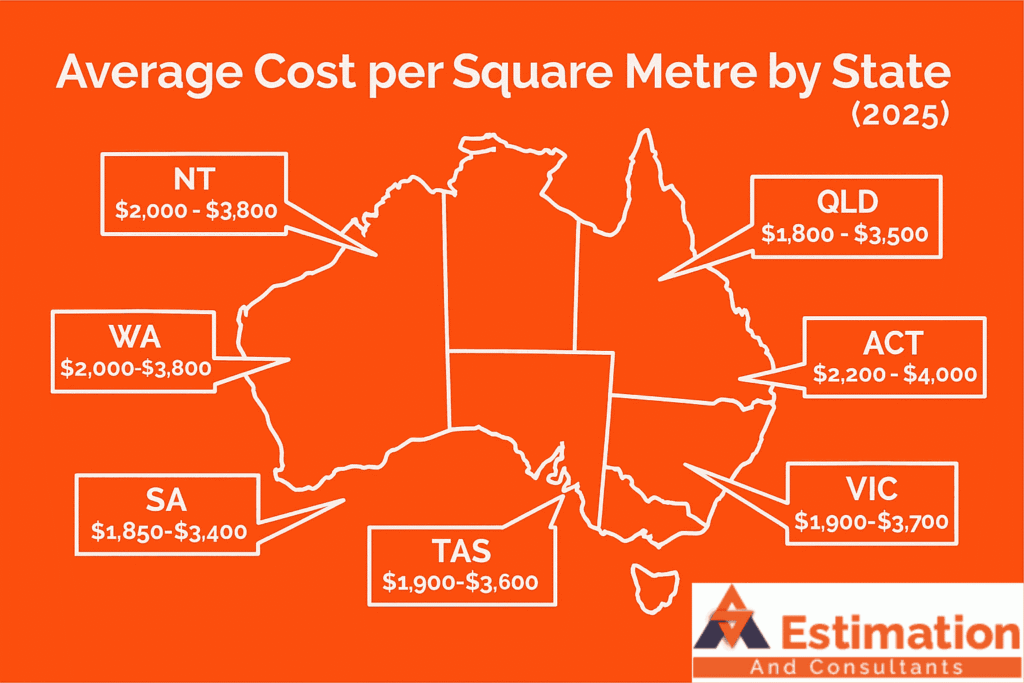
The cost to build a four-bedroom home in Australia in 2026 varies greatly by location. Labour rates, transport costs, and regional demand all shape the final price. While metro areas tend to have higher rates, regional locations often benefit from cheaper land but face added logistics costs.
New South Wales (NSW)
Building a 4-bedroom home in NSW averages $2,100–$4,000 per m², with Sydney driving higher prices due to demand and stricter building codes. Regional areas like Newcastle or the Central West sit closer to the lower end, though transport and material delivery can still influence costs.
Victoria (VIC)
Victoria’s average build cost ranges between $1,900–$3,700 per m². Melbourne’s dense construction market pushes up labour costs, while rural towns offer better affordability. Updated energy efficiency standards continue to affect overall pricing for 2025 builds.
Queensland (QLD)
In QLD, expect $1,800–$3,500 per m². Brisbane and the Gold Coast remain higher due to population growth and skilled labour demand, whereas North Queensland and inland towns present lower per-square-metre rates but can face higher material transport costs.
Western Australia (WA)
WA homes average $2,000–$3,800 per m², with Perth showing the steepest rates. Regional builds may save on land, but distance from suppliers can raise project timelines and delivery fees.
South Australia (SA)
SA offers some of the most balanced pricing, averaging $1,850–$3,400 per m². Adelaide’s stable market and moderate labour costs keep it one of the more affordable states for a four-bedroom home build.
Tasmania (TAS)
Tasmanian builds sit around $1,900–$3,600 per m². Limited trades and high transport costs can affect final budgets, especially in regional or coastal zones.
Northern Territory (NT)
In the NT, prices hover between $2,000–$3,800 per m². Darwin’s remote supply chain and harsh climate conditions add to total project expenses, though smaller town builds can be slightly cheaper.
Australian Capital Territory (ACT)
ACT build costs average $2,200–$4,000 per m², driven by high compliance standards and local labour rates. Canberra’s strong demand and sustainability focus also influence overall building costs in 2026.
Key Factors That Affect Building Costs in 2026
The average cost to build a 4-bedroom house in 2026 depends on several factors that shape your final budget. From design complexity to material and labour trends, each decision influences how much you’ll spend per square metre. Understanding these cost drivers helps you plan smarter and avoid financial surprises.
1. Design & Size
Larger homes or complex layouts naturally cost more. A single-storey design with a simple floor plan will always be more affordable than multi-level homes or custom architectural builds. Each added room, feature wall, or open-plan space increases material and labour costs, directly impacting your house build cost breakdown in 2026.
2. Materials
Material prices have stabilised slightly in 2026 but remain higher than pre-pandemic levels. Imported items and sustainable materials, such as recycled timber or solar systems, can raise expenses. Builders often recommend sourcing locally to manage material cost inflation and maintain control over timelines and quality.
3. Labour
The ongoing labour shortages in construction continue to affect building timelines and pricing. Skilled trades such as electricians and tilers are still in high demand, especially in metro areas. This keeps wage rates firm, influencing total materials and labour cost for building a 4-bedroom house this year.
4. Site & Location
A home built on flat land is always cheaper than one on a sloped or difficult block. Costs for excavation, soil testing, and retaining walls can quickly add up. Regional sites may save on land but often face higher transport and logistics expenses for materials and trades.
5. Finishes
Your choice of finishes plays a huge role in your budget. Standard inclusions such as laminate flooring or tiled bathrooms are cost-effective, while premium fixtures, stone benchtops, or designer fittings increase the final figure. The balance between luxury and practicality often defines the true building cost factors for a 4-bedroom house.
Typical Cost Breakdown of a 4-Bedroom Home
Understanding how expenses are divided helps homeowners plan better. In 2026, the average new home cost for a 4-bedroom build typically ranges between $400,000 and $800,000, depending on materials, finishes, and design choices. A clear cost breakdown shows where most of your money goes and where you can save.
1. Labour Costs (35–40%)
Labour remains the largest portion of the budget, covering builders, electricians, plumbers, and carpenters. With steady demand and limited trades, wages remain firm, directly influencing the cost per square metre of a home build in 2026.
2. Materials (30–35%)
Materials include bricks, timber, roofing, flooring, and fixtures. Price stability has improved, but higher-end finishes and sustainable products still increase total spend. Material inflation continues to shape the house build cost breakdown for 2026.
3. Permits and Approvals (5–10%)
Council fees, inspections, and certification costs vary by location. A builder fixed-price contract can help cover these predictable expenses upfront and prevent unexpected add-ons during construction.
4. Fittings and Finishes (10–15%)
Items like kitchens, bathrooms, lighting, and flooring add both comfort and character. Luxury or imported fittings can easily stretch budgets beyond the initial estimate.
5. Contingency and Miscellaneous (5%)
Every project should allow at least a 5% buffer for surprises like material delays or minor variations. These cost contingencies in a home build ensure financial flexibility and peace of mind throughout construction.
Hidden & Additional Costs to Plan For
Even with a solid estimate, many homeowners underestimate the hidden costs of building a 4-bedroom house in 2026. These extras—often overlooked in early quotes can quickly add thousands to your total. Planning for them early keeps your budget for a 4-bedroom house build realistic and stress-free.
Here are some common extra costs to expect:
-
- Site Preparation & Earthworks: Clearing, leveling, and soil testing can add 5–10% to your overall cost. Sloped or rocky blocks require extra excavation and retaining walls.
-
- Council Fees & Approvals: Local permits, inspections, and certifications vary by state and can influence your final house build cost breakdown in 2026.
-
- Utility Connections: Water, gas, electricity, and NBN setup aren’t always included in base quotes; factor in connection fees and trenching work.
-
- Driveways, Fencing & Landscaping: External finishes are often excluded from fixed-price contracts but essential for home completion.
-
- Builder Variations: Design changes, material upgrades, or mid-project adjustments add unexpected costs if not managed carefully.
-
- Contingency Fund: Always allocate 5–10% of your budget for unforeseen issues; this cost contingency in your home build ensures financial safety.
Smart Budgeting Tips for 2026 Builds
Building a new home can feel overwhelming, but smart planning can make a big difference. The key to managing your budget for a 4-bedroom house build in 2026 is staying informed, choosing the right builder, and allowing flexibility for real-world costs. Here’s how to keep your finances on track.
-
- Opt for a Fixed-Price Contract: A builder fixed-price contract locks in construction costs and protects you from market fluctuations or hidden fees.
-
- Compare Inclusions Carefully: Always review what’s covered fixtures, finishes, and appliances before signing to avoid costly surprises later.
-
- Set a Contingency Fund: Reserve 10–15% of your total home build cost for unexpected expenses or material changes.
-
- Stage Your Payments: Link payments to project milestones; this keeps cash flow smooth and ensures accountability throughout the build.
-
- Choose Energy-Efficient Materials: Investing in insulation, solar panels, or LED lighting may increase upfront costs but reduces long-term expenses.
-
- Stay Involved and Updated: Regular site visits and open communication with your builder help control variations and maintain clarity on your new home cost for a 4-bedroom build in 2026.
Trends Impacting Construction Costs in 2026
In 2026, several key trends are shaping the building cost factors for a 4-bedroom house in Australia. While prices are stabilising compared to recent years, ongoing economic and industry shifts continue to influence both material and labour expenses. Understanding these movements helps homeowners plan confidently and avoid mid-project surprises.
1. Material Price Normalization
After years of volatility, material prices are finally easing. Timber, steel, and concrete costs have steadied as global supply chains improve. While prices remain above pre-pandemic levels, builders expect moderate material cost inflation in 2026, bringing more predictability to project budgets.
2. Labour Market Recovery
The labour shortages in construction that drove costs up in 2025–2026 are slowly easing. Increased training programs and skilled migration are helping balance the workforce, which may stabilise wage growth and shorten build timelines across Australia’s major cities.
3. Sustainable Building Focus
Eco-friendly designs and materials are becoming the new normal. Energy-efficient windows, recycled timber, and solar-ready systems are adding upfront costs but delivering long-term savings. Homeowners are now prioritising sustainability as part of their overall materials and labour costs for building a 4-bedroom house.
4. Financial Conditions and Interest Rates
Rising interest rates continue to affect borrowing capacity, influencing how much homeowners can allocate toward construction. Despite this, steady demand and better cost visibility have helped keep overall building costs in Australia for 2026 relatively stable compared to previous years.
Expert Insights: What Builders Expect in 2026
Builders across Australia agree that 2026 brings more stability to the housing market. The average cost to build a 4-bedroom house in 2026 is expected to hold steady, with fewer price spikes in materials and improved labour availability compared to the unpredictable years following the pandemic.
Here’s what industry experts are saying about upcoming trends:
-
- Material Prices Are Stabilising: “After years of supply disruptions, most core materials like timber and steel have normalised,” notes a senior cost estimator from Sydney.
-
- Labour Conditions Are Improving: Builders report that better access to skilled trades is reducing project delays, keeping cost per m² of new homes in 2026 more consistent.
-
- Design Simplicity Saves Money: Experts recommend functional layouts over complex designs to manage building cost factors for 4-bedroom houses effectively.
-
- Energy Efficiency Drives Value: More clients are investing in solar and insulation systems, viewing them as long-term savings rather than extras.
-
- Regional Demand Rising: Builders expect increased construction activity outside capital cities as families seek affordability and land space.
-
- Steady Year Ahead: Overall, most builders predict 2026 will be a “balanced year” with stable pricing, shorter build times, and fewer unexpected cost fluctuations in the building cost landscape across Australia.
Conclusion
The average cost to build a 4-bedroom house in 2026 in Australia typically falls between $380,000 and $850,000, depending on your design, location, and material choices. While prices remain higher than pre-pandemic levels, the market is showing stability with fewer surprises in both materials and labour rates.
With better access to builders, clearer pricing, and more consistent supply chains, 2026 is shaping up to be a reliable year for new home construction. To plan confidently, consider a builder fixed-price contract and consult a professional estimator before starting your project. Getting a clear, fixed-scope estimate ensures your new home cost for a 4-bedroom build in 2026 stays within budget and delivers lasting value.
FAQs
What’s the average cost to build a 4-bedroom home in 2026?
The average cost to build a 4-bedroom house in 2026 across Australia ranges between $380,000 and $850,000. The final price depends on factors like design complexity, materials, and location. Homes in metro areas generally cost more than regional builds due to higher labour and permit expenses.
What’s the cost per square metre in major cities?
The cost per square metre for home builds in 2026 typically falls between $1,800 and $4,000. Sydney and Melbourne are at the higher end, while Brisbane, Adelaide, and Perth tend to offer more affordable construction rates depending on the level of finish and inclusions.
Are 2026 prices higher than last year?
Not significantly. While building costs in Australia for 2026 remain higher than pre-pandemic levels, prices have stabilised compared to 2025. Material costs are levelling off, and labour shortages are easing, creating a more balanced construction market overall.
Does the cost include land?
No, the estimated average cost to build a 4-bedroom house in 2026 usually excludes land. It covers construction, materials, and standard finishes but not land purchase, landscaping, fencing, or utility connections; these are separate expenses to plan for.
How can I reduce my build cost?
You can manage your budget for a 4-bedroom house build by choosing a fixed-price contract, simplifying your design, and sticking to standard inclusions. Sourcing locally made materials and avoiding mid-project changes also helps control costs without sacrificing quality or comfort.
Get an accurate cost for your new home
Upload your plans for a free quote. You get a PDF report and an Excel cost breakdown.
Get a Free Estimate From Your Plans →