A masonry estimate is one of the most important parts of planning any building or repair project. It shows what the work includes, how much material is needed, how long the labour will take, and what the overall cost will be. When homeowners and builders understand these parts clearly, budgeting becomes much easier.
Knowing how a professional masonry estimate is built also helps you compare quotes with confidence. You can see why one contractor charges more, what each estimate covers, and whether anything important is missing. This understanding reduces surprises, prevents hidden costs, and gives you a clear path before construction begins.
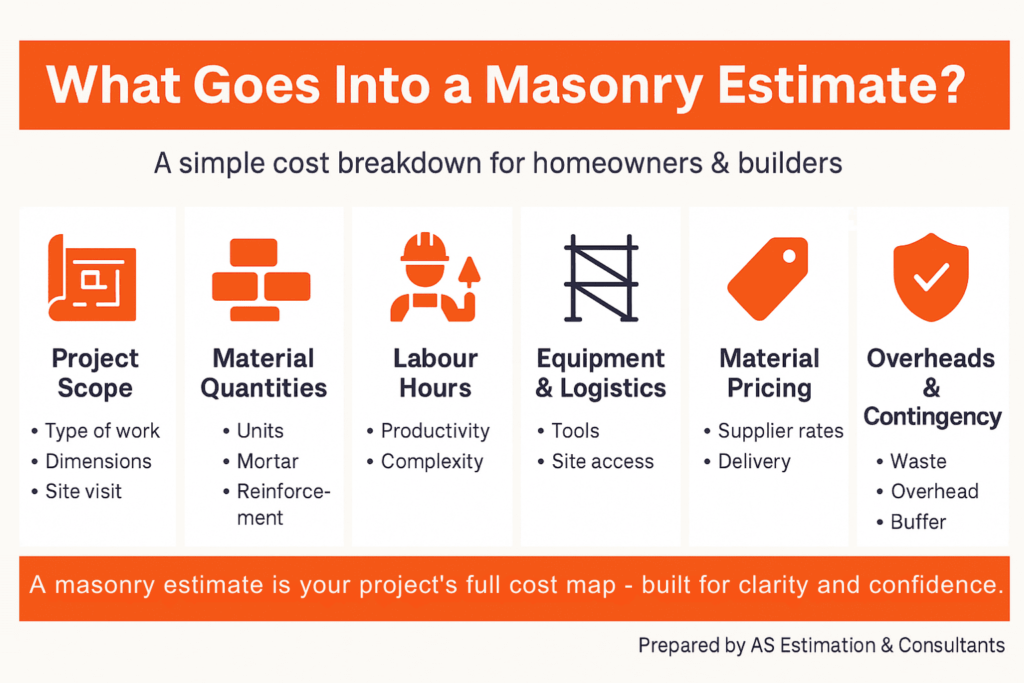
Project Scope — The First Element Every Masonry Estimate Starts With
Every reliable masonry estimate begins with a clear project scope. This is where the estimator understands what you want built, how big it is, and what conditions exist on your site. A well-defined scope removes guesswork, reduces risk, and makes sure your final cost reflects the actual work required.
Type of Masonry Work
The first step is identifying the exact type of masonry work you need. Brickwork, blockwork, stonework, veneer, retaining walls, and repair or restoration each have different materials, tools, and labour needs. When this is defined clearly upfront, your estimate becomes accurate, predictable, and aligned with the real effort needed.
Dimensions & Specifications
Next, the estimator measures the length, height, and thickness of the wall or structure. These dimensions determine how many units, how much mortar, and what reinforcement is required. Precise measurements are essential because even small changes in size can affect material quantities and labour hours. This is the backbone of the estimate.
Drawings, Site Visit & Requirements
The estimator then studies your drawings, structural notes, and any engineering details. A site visit helps confirm access, level changes, and potential demolition. These details ensure the estimate reflects real site conditions rather than assumptions. When the site is understood properly, your final price is realistic and avoids surprise costs.
Why it matters:
A clear project scope defines every other cost in the estimate. Materials, labour, equipment, and timelines all depend on how well the project is understood from the start.
Quantity Takeoff — Measuring Materials Accurately
Quantity takeoff is the stage where every material needed for the masonry work is measured. It’s the technical foundation of the estimate and the part that influences the cost the most. When these quantities are calculated correctly, the final price becomes predictable and easy to understand.
Masonry Units Count
The estimator begins by calculating how many bricks, blocks, or stones the wall requires. This comes from measuring the total wall area and reviewing the pattern or layout. A straight wall uses fewer units, while detailed or curved designs need more cutting and more material.
Key factors in this step include:
- Wall Area: Length × height gives the base measurement.
- Pattern Type: Running bond, stacked, or decorative layouts change the count.
- Openings: Windows and doors reduce quantities but increase the need for careful cuts.
This count matters because it heavily impacts both material and labour requirements.
Mortar Calculation
Mortar is measured separately because it depends on joint thickness, mixing ratios, and the type of brick or block being installed. The estimator checks how wide the joints are and how much mortar each part of the wall will use.
Important details considered:
- Joint Thickness: Wider joints require more mortar.
- Mix Ratio: The sand-to-cement ratio affects volume.
- Absorption: Some bricks absorb more moisture, increasing usage.
This step prevents shortages and keeps the estimate grounded in real material behaviour.
Reinforcement Items
Reinforcement adds strength to the wall, and each piece must be counted carefully. Steel bars, mesh, ties, anchors, and lintels are included based on the structure’s height, span, and engineering requirements.
Typical reinforcement items include:
- Rebar: Vertical and horizontal steel for load areas.
- Mesh: Used to prevent cracking.
- Ties & Anchors: Connect masonry to other structures.
- Lintels: Support over doors and windows.
Missing these items in the estimate can lead to major cost changes, so accuracy here is essential.
Additional Components
Small components add up quickly, and a complete estimate must include them. These items improve durability, drainage, and weather resistance.
Common additions are:
- Flashing: Keeps water out of joints.
- Waterproofing: Protects walls from moisture.
- Weep Holes: Allow water to drain.
- Other Accessories: Corner beads, joint reinforcements, sealants.
Including these ensures the estimate reflects the full cost of building a durable wall.
Why it matters:
Material quantities form the largest part of a masonry budget. When every unit, bag of mortar, and reinforcement item is measured properly, the estimate becomes accurate, honest, and far more dependable for both homeowners and builders.

Labour Estimation — How Labour Hours Are Calculated
Labour estimation explains how long the work will take and how many people are needed to complete it. Since labour is the second-largest cost in masonry, small changes in time or complexity can impact the final price. A clear labour estimate helps homeowners and builders plan realistically.
Mason Productivity Rates
Estimators first look at how many units a mason can lay in a day. This depends on the mason’s skill, the type of material being used, and how steady the work environment is. Experienced masons move faster, but the estimator must still allow time for setup, cutting, and clean-up to keep the estimate realistic.
Productivity depends on:
- Skill Level: Experienced masons lay more units per hour.
- Material Type: Bricks, blocks, and stone all have different pace levels.
- Work Flow: A steady supply of materials improves speed.
Accurate productivity rates prevent underestimating or overestimating total labour time.
Complexity Adjustments
After base productivity rates are set, the estimator adjusts them for real-world conditions. Curved walls, decorative designs, extra height, and scaffolding all slow the pace. Tight access can also reduce speed because masons spend more time moving materials or adjusting their work area. These factors ensure the estimate reflects practical working conditions.
Common complexity factors include:
- Curved or Detailed Designs that need extra cutting
- Scaffolding or Height Work which limits speed
- Tight Access causing slower material handling
These adjustments keep the labour estimate grounded and honest.
Total Man-Hours & Crew Cost
Once the pace and complexity are known, the estimator calculates the total man-hours. This includes the time for masons, helpers, and sometimes a foreman. Each role has a different rate, so the estimator adds them together to find the full crew cost. This step gives a clear picture of how labour impacts the total budget.
Crew considerations:
- Masons: Main installation work
- Helpers: Mixing mortar, moving materials
- Foreman: Supervision and coordination
This final number shows the true labour cost and helps set a reliable project timeline.
Why it matters:
Labour is the second-largest cost after materials. When labour hours are calculated carefully, the entire estimate becomes more accurate, and both homeowners and builders avoid unexpected charges during construction.
Equipment & Site Logistics — Hidden but Essential Cost Components
Equipment and site logistics shape how smoothly a masonry project runs. These items don’t always appear at the front of a quote, but they directly influence how long the job takes and how much labour is required. When they’re included clearly, homeowners and builders understand why certain parts of the estimate look the way they do.
Required Equipment
Every masonry job relies on a few key tools to keep work steady and safe. Mixers help prepare mortar consistently, scaffolding allows the crew to work at height, and cut saws keep edges clean and precise. Hoists are used when materials need to be lifted to upper levels. These tools don’t just speed up the job—they also reduce mistakes and reduce strain on the crew. Because of this, a good estimator includes them as part of the project’s real cost.
Site Access & Material Handling
Site access has a big effect on both time and cost. When materials are easy to move from the delivery truck to the work area, everything runs faster. But long distances, narrow pathways, uneven ground, or elevated spaces require extra handling and more labour time. Even a small obstacle can slow the flow of materials, which changes how the crew works throughout the day. A detailed estimate reflects these conditions so the homeowner sees a price based on the true effort needed.
Safety & Compliance Requirements
Safety requirements are part of every job, whether the wall is small or large. Barriers, protective equipment, and fall-protection setups keep the crew secure and the site compliant with regulations. These steps take time to set up and manage, but they prevent delays, injuries, and shutdowns. A professional estimate includes these safety needs because they’re necessary for a smooth and responsible project.
Why it matters:
Equipment, access, and safety all influence the project timeline and labour demand. When these factors are included in the estimate from the start, the price becomes clearer, more dependable, and easier for homeowners and builders to plan around.
Material Pricing — Determining the Actual Cost of Materials
Material pricing is one of the most important parts of a masonry estimate because it makes up the largest share of the total cost. The estimator reviews current supplier rates, transport charges, and market changes to determine what the project will truly cost. Clear material pricing helps homeowners and builders plan with confidence.
Local Supplier Rates
The estimator starts by checking the prices offered by local suppliers. Bricks, blocks, stone, mortar, sand, and steel all have different unit costs, and these prices can vary from one supplier to another. The estimator compares these rates to find realistic, locally accurate numbers. This step ensures the estimate reflects real market conditions, not guesswork.
Common materials priced include:
- Bricks and blocks
- Natural or manufactured stone
- Mortar and sand
- Steel bars and ties
Accurate pricing here keeps the estimate grounded and protects the client from unexpected increases.
Transport & Delivery Fees
Material pricing also includes the cost of getting the materials to the site. Delivery trucks, crane offloading, and fuel adjustments all influence the final number. Some sites require extra handling because of distance or difficult access, which adds time and labour. Including these costs up front helps avoid delays and last-minute charges.
Estimators consider:
- Delivery truck charges
- Crane or mechanical offloading needs
- Fuel surcharges and distance-based fees
These factors keep the estimate honest and reflect the real cost of material movement.
Market Price Fluctuations
Cement, steel, and other construction materials can change in price quickly. The estimator looks at recent trends to see whether the market is stable or rising. If prices are increasing, a small buffer may be included to protect the homeowner from sudden spikes. This helps keep the project on budget even when the market shifts.
Fluctuations are most common in:
- Cement
- Steel
- Imported stone
Recognizing these changes makes the estimate more dependable.
Why it matters:
Material costs can shift faster than labour or equipment costs. When pricing is updated carefully—and all fees and market changes are considered—the estimate stays accurate and helps homeowners and builders avoid unpleasant surprises later.
Overheads, Waste & Contingencies — Cost Factors Clients Often Overlook
This part of the estimate covers the small but essential costs that keep the project moving smoothly. Many homeowners don’t see these items directly on-site, but they’re necessary for a safe, organised, and realistic project budget. When included properly, they protect both the client and the contractor from surprise expenses.
Waste Percentages
Waste is a normal part of masonry work. Bricks and blocks can break during cutting, mortar can spill or dry out, and weather conditions can slow down the work. The estimator includes a small waste percentage so there are enough materials to finish the job without delays. This avoids mid-project shortages and keeps labour running smoothly.
Typical waste sources:
- Breakage during handling or cutting
- Mortar loss due to drying or spills
- Weather delays affecting material use
Planning for waste ensures the project stays on track.
Contractor Overhead
Contractor overhead covers the costs of running a professional job. This includes insurance, supervision, office administration, and long-term equipment upkeep. These expenses support the project even though you may not see them directly on site. Without overhead included, the estimate wouldn’t reflect the true cost of delivering a safe and organized project.
Overhead often includes:
- Project supervision
- Administrative support
- Insurance and permits
- Equipment depreciation
These items help maintain quality and safety throughout the job.
Contingency Allowance
Contingency is added to handle unexpected situations, especially on renovation or complex sites. Hidden issues behind walls, structural changes, or shifting site conditions can affect time and cost. A small contingency protects the homeowner from sudden price jumps and gives the contractor room to manage real-world conditions without compromising the work.
Contingency is most useful when:
- The site has limited access
- Existing walls require removal
- Plans change during construction
This allowance keeps the project stable even when surprises appear.
Why it matters:
Overheads, waste, and contingency work together to prevent unexpected expenses. When they’re included in the estimate, the project becomes more predictable, safer, and easier for both homeowners and builders to manage.
Final Estimate Breakdown — What a Complete Masonry Estimate Should Include
A complete masonry estimate pulls every part of the project into one clear total. This breakdown helps homeowners and builders understand where the money is going and what work is included. When the estimate is organized properly, it becomes easier to compare contractors, plan budgets, and avoid surprises during construction.
Summary of All Line Items
The estimate begins with a simple summary of the major cost categories. Each one represents a different part of the work and shows how much of the budget goes toward materials, labour, equipment, and overhead. Bringing these together gives a clear picture of the full project cost and prevents any hidden charges later.
A complete line-item summary includes:
- Materials: Bricks, blocks, mortar, steel, accessories
- Labour: Masons, helpers, supervision time
- Equipment: Mixers, scaffolding, cut saws, hoists
- Overheads: Insurance, admin, safety requirements
- Total Project Cost: The combined amount needed to complete the job
This structure gives homeowners a simple and honest view of the full investment.
Inclusions & Exclusions
A professional estimate clearly states what is included in the price and what is not. This prevents misunderstandings once work begins. Inclusions usually cover materials, labour, and standard equipment, while exclusions highlight items that may require extra charges, such as demolition, specialty finishes, or unexpected structural changes.
Clear inclusions and exclusions allow homeowners to compare quotes fairly and know exactly what they’re paying for. Without this section, two estimates may look similar in price but cover very different scopes of work.
How to Identify a Transparent, Professional Estimate
A reliable estimate is easy to read, explains its assumptions, and shows how quantities were calculated. Contractors who provide itemized costs, clear pricing, and explanations of why certain materials or labour amounts are needed are usually the most trustworthy. This level of detail shows care, experience, and a commitment to fairness.
A transparent estimate often includes:
- Itemized material quantities
- Labour hour calculations
- Notes on site conditions or assumptions
- A clear explanation of the pricing method
These details allow the homeowner to understand the logic behind the cost.
Why it matters:
A well-structured final estimate helps homeowners and builders confirm they’re receiving a complete, honest, and reliable breakdown. When everything is clearly explained, the entire project becomes easier to plan, manage, and trust.
Why Professional Masonry Estimators Deliver More Accurate Costing
A professional estimator brings steady judgment to the job. They look at the work the same way a builder does on-site. This means the estimate is based on real conditions, not guesses. When the numbers are right from the start, the project runs smoother and the homeowner can plan with confidence.
Specialized Tools & Software
Most of the accuracy comes from using the right tools. Digital takeoff software measures areas, brick counts, mortar needs, and reinforcement much more reliably than doing everything by hand. These tools help catch small details early, and that reduces the chance of running short on materials or stretching the budget later.
Experience Reading Plans & Site Conditions
Good estimators know how to read building plans the way the designer intended. They understand where the important notes are and what might cause extra work on site. They also know how height, access, or demolition can slow the job down. This mix of plan reading and real-world experience is what keeps the estimate realistic.
Cost Planning for Homeowners & Project Teams
A strong estimate also gives the homeowner a clear picture of how the money will be spent. It shows what the material cost is, how much time the crew will need, and what equipment the project requires. This helps everyone prepare before work begins. It’s the same careful approach used by AS Estimation & Consultants when planning costs for clients.
FAQs
You should look for a clear breakdown of materials, labour, equipment, and any overhead costs. A good estimate also lists what’s included and what isn’t. If everything is written out in simple terms, it becomes easier to understand where the money is going and whether the price makes sense.
Masonry estimates vary because each contractor measures the work differently, uses different suppliers, and includes different costs. Some include overhead, waste, or site challenges, while others leave those out. This creates price gaps. The most dependable estimate is the one that explains how the numbers were built.
No, a masonry estimate does not always include demolition or cleanup. Some contractors include these steps in the main price, while others list them separately. It depends on the scope discussed. Always check the inclusions and exclusions so you know exactly what you’re paying for.
You can tell an estimate is accurate when it shows real measurements, explains labour time, and accounts for site conditions. It should also use current material prices. If the estimate feels clear, detailed, and easy to follow, it’s usually a sign that the numbers are reliable.
Not always. Some estimates include a small allowance for price changes, especially for cement and steel. Others lock in prices for a short time. It’s best to ask how long the pricing is valid so you know whether adjustments might apply before the work starts.
Conclusion
A masonry estimate is more than a list of numbers. It’s a clear map of how the project will run and what it will cost from start to finish. When you understand the materials, labour, equipment, site logistics, and overhead involved, it becomes easier to plan your budget and choose the right contractor.
A detailed estimate also helps you avoid surprises. You can see what’s included, what isn’t, and why each part of the job matters. This gives both homeowners and builders the confidence to move forward knowing the work is priced fairly and based on real conditions. A strong estimate sets the tone for a smooth, well-managed project.