Cladding costs in Australia have shifted rapidly leading into 2025, and builders are feeling the impact long before installation begins. Material prices continue to move, labour availability is inconsistent across states, and new NCC requirements are adding extra layers to both supply and installation. All of this makes accurate estimating more important than ever.
This guide breaks the entire process into clear, practical steps so builders can understand what truly drives cladding costs in Australia—material choices, labour rates, access challenges, compliance, preliminaries, and risk allowances. Whether you’re quoting a small residential upgrade or a large commercial façade, the goal is simple: help you produce a reliable, transparent, and defensible cladding estimate for 2025.
The Reality of Cladding Costs in Australia in 2025
Cladding costs continue to shift across Australia, and builders need a realistic starting point before estimating. Material prices have climbed, labour availability remains tight, and supply chains are still unpredictable. Add new NCC updates, and it’s clear why every 2025 cladding cost estimate guide must reflect current on-ground conditions.
Across states, the cladding cost per m² in Australia 2025 varies more than before. These changes influence every quote, especially for builders navigating cladding estimates Australia or preparing a detailed cladding cost guide Australia for clients.
Key Cost Realities in 2025
- Material Price Growth
Ongoing material pricing trends 2025 continue to push supply costs higher. - Labour Rate Pressure
Australian labour rates have risen due to shortages and higher demand. - Supply Chain Delays
Longer lead times affect project sequencing and overall cladding budgets. - Regulatory Shifts
Updates to the NCC and Australian Standards increase compliance-related costs. - Regional Cost Variation
Significant differences in pricing across states influence the final cladding cost estimate 2025. - Higher Risk Margins
Builders now add buffers to cover cost volatility and delivery uncertainty.
Material Costs
Material supply is one of the biggest cost drivers in any Australian cladding estimate. Prices continue to shift across states due to rising manufacturing costs, transport distances, and tightening compliance requirements. Builders preparing a cladding cost estimate 2025 Australia must rely on accurate quantities and current market rates to avoid budget blowouts.
Different materials also come with different fixings, trims, and performance needs. Whether it’s fibre cement, metal, timber, or composite panels, the final supply cost hinges on both the product and the accessories needed to install it correctly in Australian conditions.
Cost per m² for Popular Cladding Materials in Australia
When estimating fibre cement cladding cost 2025 Australia, metal cladding cost Australia, or timber and composite systems, builders must allow for both base material and accessory components. Fibre cement offers strong fire resistance and affordable pricing but requires precise jointing and trim allowances. Metal systems like Colorbond are lightweight yet often sit higher in supply cost due to coatings and manufacturing processes. Timber remains popular for aesthetics but varies significantly based on species and treatment requirements, while composite panels deliver durability at a mid-to-high price point. Accurate material quantities and allowances for fixings and trims are essential for reliable Render & Cladding Estimates in Australia.
Insulation, Sarking & Thermal Requirements (Australian Climate Zones)
Australian climate zones and NCC thermal standards play a major role in supply cost. Projects in bushfire-prone areas require compliant insulation, higher fire ratings, and specific sarking types. Cold regions need thicker thermal layers, while hotter climates rely on reflective sarking for energy efficiency. These added components influence overall insulation and sarking costs Australia and must be included early in any estimate. Ensuring alignment with cladding compliance requirements and fire-rating standards is non-negotiable, especially when quoting for builders working across different states.
Flashings, Trims & Waterproofing in Australian Conditions
Flashings and trims are critical in Australian cladding projects, particularly in cyclone-prone regions, coastal zones, and high rainfall areas. These areas demand robust waterproofing systems, UV-resistant materials, and tighter junction detailing. Builders must allow for all flashings and junction details to prevent leaks, deterioration, and rectification costs later. These components often add more to the budget than expected, which is why flashing and finishing costs should be included as a clear line item in every cladding estimate. Proper allowances ensure durability and compliance across Australia’s diverse environmental conditions.
Labour Costs
Labour remains one of the biggest variables in any cladding estimate across Australia. With skilled installers in short supply and increasing demand for compliant façade systems, installers are charging higher rates than previous years. Every cladding cost estimate 2025 Australia must reflect current labour trends to stay accurate.
Labour costs also shift from one state to another. Builders working across borders quickly see the difference between metro, regional, and remote pricing. Understanding these variations early protects budgets and helps avoid unexpected overruns during installation.
Australian Cladding Installer Labour Rates 2025
Labour rates vary heavily across the country. NSW and VIC remain the highest due to strong construction activity and limited installer availability. QLD and WA follow close behind, especially in high-growth coastal regions. Regional areas generally have lower rates but face longer wait times and lower labour productivity. When calculating supply and install rates, builders must factor in how local market pressure influences final pricing. Current labour rates for cladding installers Australia often form the largest portion of installation cost, making accurate state-by-state allowances essential.
Australian Complexity Multipliers
Not all cladding jobs take the same amount of labour. Two-storey homes, multi-storey builds, curved façades, or projects in bushfire zones require additional installation time and specialised skills. Coastal areas often need corrosion-resistant fixings and detailed sealing, which increases labour hours and equipment use. These cost drivers—height, access, design detail, and compliance—directly influence final installation budgets. Builders must consider all factors that impact cladding costs Australia to avoid underestimating labour on complex sites.
Site & Access Costs
Site and access conditions play a major role in shaping cladding budgets across Australia. Tight urban blocks, sloping lots, and remote locations can significantly increase equipment needs and installation time. Every cladding cost estimate 2025 Australia must account for access limitations before work begins.
These variations affect not only equipment hire but also the sequencing of trades. Builders who factor in access conditions early complete projects more smoothly and avoid costly delays later.
Scaffolding, Boom Lifts & Access Challenges in Australian Sites
Access-related costs vary widely depending on where the project is located. In dense areas like Sydney or Melbourne, limited space often requires compact scaffolding systems, specialised boom lifts, and additional safety controls. Sloped lots demand extra stabilisation, while rural sites can involve long travel distances and higher mobilisation charges. All of these elements influence scaffold and access costs, and accurate scaffold and access allowances Australia are essential for a realistic estimate. Failing to budget for access restrictions is one of the most common causes of cost overruns in cladding projects.
Substrate Preparation & Make-Good Requirements
Substrate conditions differ greatly across Australia’s housing stock. Older brick homes may require crack repairs or render removal, while weatherboard properties often need alignment or replacement before new cladding can be installed. Lightweight construction systems common in modern builds may need reinforcement or moisture corrections. These steps form a core part of substrate preparation, and skipping them risks installation failure. Proper allowances for external wall preparation costs in Australia ensure builders avoid unexpected variations and maintain compliance with cladding installation standards.
Project-Level Costs
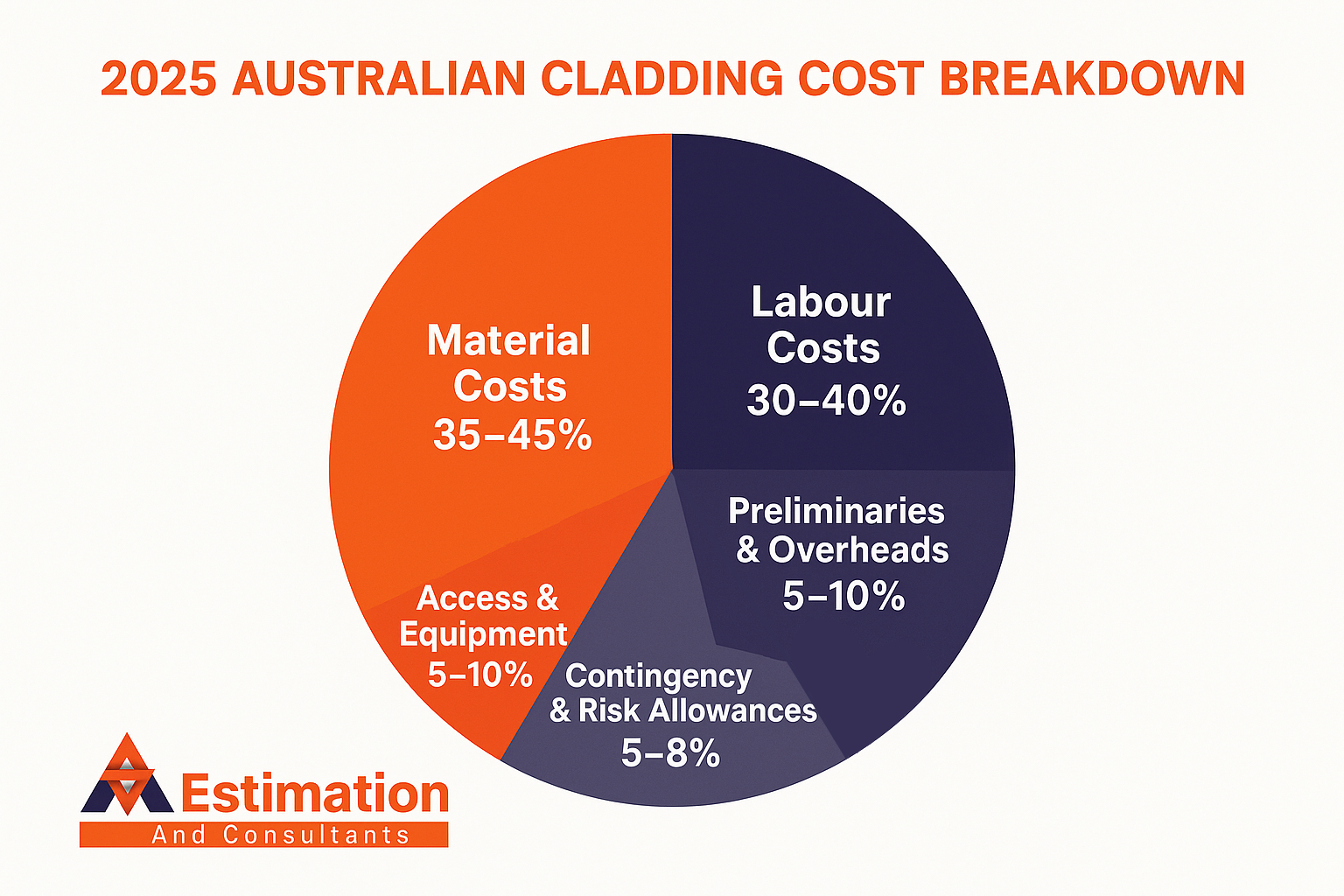
Project-level expenses shape the true cost of cladding work across Australia. These are the costs that sit outside materials and labour but still impact every build—site establishment, compliance, supervision, equipment, weather delays, and waste. Any cladding cost estimate 2025 Australia that ignores them will fall short.
Because these costs vary from site to site, builders must review them early. Good planning reduces risk, avoids surprises, and keeps budgets predictable throughout the project.
Overheads, Preliminaries & Supervision in Australian Builds
Overheads and preliminaries cover essential site-wide expenses such as site setup, SWMS documentation, WHS compliance, temporary fencing, amenities, cranes, and supervision hours. These items rarely appear in basic quotes, yet they influence the final total more than most builders expect. Accurate allowances for overheads and preliminaries are vital when learning how to estimate cladding costs in Australia. Many project overruns can be traced back to missing preliminary budgets, especially on multi-storey or highly regulated sites.
Weather, Waste, Transport & Contingency in Australian Conditions
Australia’s climate and geography add unique risks to cladding projects. High heat slows installation, heavy rain halts outdoor work, and long transport distances in regional areas increase freight costs. Waste disposal fees also add up quickly when removing old cladding or cutting new panels. Builders must factor in weather impacts and delays, along with suitable risk contingencies, to protect their budget. Ignoring these elements leads to underestimated quotes and the kind of cost risks in cladding projects in Australia that can derail a schedule.
Estimating Workflow for Australian Builders (Step-by-Step)
A reliable cladding estimate starts with a clear, structured workflow. Builders who follow a consistent process produce clearer budgets, avoid gaps, and reduce variation risk. Each step—from measuring walls to adding contingencies—plays a role in building a realistic and defensible number for Australian conditions.
This workflow helps forecast the real cost of materials, labour, access, and compliance before work begins, giving builders the confidence to quote accurately and manage project risks.
Key Steps in the Australian Estimating Process
- Measure External Wall Areas
Start with accurate dimensions to calculate material quantities and deliver a reliable façade cladding cost breakdown in Australia. - Select NCC-Compliant Cladding Systems
Confirm material choices meet compliance requirements and required fire-rating standards to ensure alignment with cladding compliance requirements Australia. - Calculate Supply + Install Rates
Combine current market supply and install rates for your chosen cladding system to build the base project cost. - Add Site & Access Adjustments
Factor in lifts, scaffolding, and equipment based on real scaffold and access costs for the site. - Include Preliminaries & Contingencies
Add allowances for overheads and risk contingencies to protect the estimate from weather, delays, or scope changes. - Review for Accuracy & Missing Items
Cross-check quantities, compliance, access, and prelims to ensure no hidden costs remain.
What Drives Regional Cost Differences
- Sydney Labour Premiums
High demand and limited installer availability push up metro rates, influencing regional cladding price differences 2025 Australia. - Melbourne Access Constraints
Dense urban blocks and tight laneway access can increase equipment costs and project duration. - Perth Material Import Costs
Western Australia often sees higher supply pricing due to longer freight routes and limited local stock. - Regional & Remote Transport
Longer distances and higher delivery surcharges impact budgets outside major cities. - Variable Market Demand
Hot construction markets drive higher pricing, while slower regions generally offer more competitive rates. - Local Compliance Considerations
Bushfire zones and high-wind coastal areas may require system upgrades that affect final cost.
Hidden Costs Australian Builders Commonly Miss
Even well-planned cladding projects can blow out when hidden costs slip through early estimates. Australia’s varied climate zones, compliance rules, and environmental conditions create unique challenges that aren’t always obvious at tender stage. Missing these items often leads to unexpected overruns—one of the biggest cost risks in cladding projects.
Builders working across different states must consider bushfire rules, cyclone requirements, wind loads, and coastal conditions before pricing. These factors directly influence material selection, fixings, and flashings and junction details, all of which link back to essential compliance requirements.
Commonly Missed Cost Traps
- Bushfire BAL Requirements
Projects in BAL-rated areas need compliant cladding systems, seals, and fire-resistant components that increase supply and install costs. - Cyclone Area Upgrades
North QLD, NT, and parts of WA require strengthened systems, thicker panels, and reinforced fixings to meet cyclone compliance. - High-Wind Fastening Systems
Coastal and elevated regions often need upgraded brackets, screws, and tie-downs to meet structural and wind-load requirements. - Coastal Corrosion Protection
Salt exposure near the coast demands corrosion-resistant metals and coatings, which affect both material cost and detailing. - Specialised Flashings
Complex junctions or harsh weather zones may require custom flashings that add unexpected cost. - Additional Moisture Barriers
Some climates need extra sarking or vapour barriers to meet performance and compliance rules.
Tendering for Cladding Packages in Australia in 2025
Clear tendering is essential for accurate cladding estimates in Australia. Builders who provide complete documentation and transparent scopes avoid variations, delays, and disputes. With NCC updates and stricter compliance standards, every tender must spell out the full requirements before pricing begins.
Successful tendering relies on detail. The more information provided—drawings, access plans, inclusions, exclusions—the easier it is for installers and estimators to produce an accurate number. Strong tender documentation also highlights key cost drivers, helping both parties minimise risk during tendering for cladding packages Australia.
What Builders Must Include in 2025
- NCC Compliance Evidence
Confirm fire ratings, system approvals, and performance requirements before pricing begins. - Full Shop Drawings
Accurate elevations, junctions, penetrations, and detailing allow precise quantity and cost calculation. - Clear Inclusions & Exclusions
Listing what is and isn’t included removes ambiguity and protects both builder and installer. - Site Access Plans
Provide details on scaffolding needs, boom lifts, restricted access areas, and site constraints. - Material and System Selection
Specify the exact cladding system, finish, thickness, and fixing method to avoid pricing errors. - Sequence and Program Requirements
Sharing timelines helps installers plan labour availability and identify potential delays early.
FAQs
Cladding costs vary depending on the material, location, and access conditions, but most builders in Australia are seeing ranges from $90 to $250 per m² for supply and install. Fibre cement sits at the lower end, while composite and metal systems usually cost more due to detailing and compliance requirements.
Costs are rising because materials, labour, and compliance requirements have all become more demanding. Installers are in short supply, freight is more expensive, and NCC updates have added extra layers like fire-rated sarking, upgraded fixings, and higher performance standards. All of these flow into the final cladding budget.
Labour and access almost always have the biggest impact. Even when material prices fluctuate, labour rates and scaffold or boom-lift costs tend to shift the budget more than anything else. Projects with tight access or multi-storey work will always see higher overall costs.
Yes, different Australian states have different cladding prices. Sydney and Melbourne have higher labour rates, while Perth often faces higher material costs due to freight. Regional areas have cheaper labour but more expensive delivery. These differences create noticeable price changes from state to state, so location should always be part of the estimate.
Your system should come with fire-rating certificates, performance data, installation instructions, and compliance statements. Builders should request this information before tendering. An estimator or installation contractor can also confirm whether the chosen material meets NCC and Australian Standard requirements.
Conclusion
Cladding costs in Australia are shifting fast in 2025, and builders who rely on outdated rates or incomplete scopes will almost always face overruns. A reliable estimate comes down to one thing: understanding every cost driver before committing to a number. When you break the job into materials, labour, access, preliminaries, and compliance, the budget becomes clearer—and far easier to control.By following a structured estimating workflow and accounting for real Australian site conditions, builders can avoid the hidden costs that typically catch projects off guard. Strong documentation, accurate quantities, and the right contingencies help protect the job from delays, variations, and rising market pressures. With the right process in place, your cladding estimate becomes more than a guess—it becomes a dependable planning tool for delivering projects on time and within budget with the help of AS Estimation & Consultants.